
I was ninety when Ethan found the printed copy of the original will.
Not the updated one.
The old plan.
Parents.
Lauren.
Future education trusts.
Lake house.
Foundation seats.
Everything.
It had been scanned and archived long ago, but a paper copy remained in a box that moved too many times.
Ethan held it like historical document.
“This is the famous will?”
“Apparently.”
He read.
“Aunt Miranda, this is enormous.”
“I know.”
“Mom was going to get all this?”
“Not exactly. Estate values change. Plans can change. But yes, she was a major beneficiary then.”
He looked stunned.
“Do you regret changing it?”
“No.”
Immediate.
Then I thought.
“I regret that it took a car crash to realize I needed to rethink.”
Different.
Had my parents answered, would I have left plan forever?
Maybe.
Would that have been wrong?
Not automatically.
They were family.
I could leave.
But I had built it on assumptions.
That was the issue.
I asked Ethan:
“What do you think they lost?”
“Money.”
“Some expected money.”
“Lake house.”
“I sold years later anyway.”
“Board seats.”
“They were never qualified.”
He laughed.
“So what did they actually lose?”
“Certainty.”
That was the answer.
They had been certain I would continue.
Certain access.
Certain financial protection.
Certain the strong daughter would absorb neglect.
The hospital broke certainty.
At first, that felt like punishment.
Over time, it became healthier for everyone.
Dad apologized without inheritance return.
Mom learned to ask instead of assume.
Lauren built life not around my estate.
Ethan built career.
The foundation became professional.
I built support network.
The “cost” of their cruelty was not dollars as revenge story would frame.
It was the end of entitlement to my choices.
That distinction mattered at ninety as much as at fifty.
I told Ethan:
“If someone writes this story as ‘family ignored rich woman and lost millions,’ they’ll miss it.”
“What should they write?”
“That I needed family and learned money had been standing in for boundaries.”
He smiled.
“Less catchy.”
“Yes.”
Reality often is.
By then, Lauren was eighty-six.
Caleb had died a few years earlier after heart disease.
She lived in a condo near Ethan and Olivia.
We called almost daily, mostly because both bored.
Not obligation.
One morning she forgot our call.
I teased.
“Should I change my will?”
She laughed for five minutes.
Humor possible only because threat gone.
She knew exact estate was not topic.
I had told broad:
Most goes charitable.
Some fixed family gifts.
No one should plan.
She accepted.
The old fear vanished.
At ninety-one, my cognition remained mostly intact but slower.
I made one final estate review with Sofia’s younger partner.
Every document clear.
Foundation charity.
Specific bequests.
Professional executor.
Healthcare.
Financial authority.
No hospital scramble.
No dramatic disinheritance.
No one removed that day.
Good.
I wrote final letter to Lauren and Ethan.
Short.
I did not recount nine calls.
They knew.
I wrote:
Family is not measured by who receives what after I die. I spent too many years letting money carry meanings it could never carry cleanly.
I loved Mom and Dad even after changing my estate. I loved Lauren before, during, and after our worst years. I love Ethan and Sophie without needing to guarantee their futures.
What remains goes where I chose after a lifetime of thought, not as a reward chart.
Use what comes to you well. Do not compare. Do not turn generosity into control.
Then stop reading and go live.
Love,
Miranda.
Sofia's partner laughed.
“Very concise.”
“I’ve had decades.”
Good.
At ninety-two, I needed assisted living.
The community made move easy.
Same campus.
Lauren could not help physically much.
Ethan and Olivia did some.
Professional movers.
Again.
No one sacrificed backs to prove love.
My room smaller.
I kept photos.
A painting from first office.
A small lake photo.
Not property.
Memory.
One framed photo showed my parents on Lauren’s Ridgefield porch the day after my crash.
Why keep that?
I had saved screenshot decades ago as evidence of hurt.
I found during move.
I almost threw.
Then noticed something.
Dad holding lamp looked tired.
Mom smiling.
Lauren filming.
It was not evil scene.
It was ordinary family day happening at the wrong time.
That was what made it painful.
I deleted digital duplicate and threw print.
I no longer needed proof.
The nine calls were real.
No one disputed.
Evidence had done its work.
At ninety-three, Lauren died before me.
That shocked us all.
A stroke.
Fast.
I hated order.
Older sister should go first? There was no rule.
I sat with Ethan at funeral.
He cried.
I did too.
I thought of girl I grew up with.
Favorite.
Needy.
Dramatic.
Funny.
Mother.
Wife.
Grandmother.
Sister who drove me to surgery.
Sister who ignored my hospital calls.
All true.
No single one became final.
Her modest bequest from my estate obviously could no longer go directly; contingent terms handled Ethan/charity according to documents.
No last-minute change from grief.
Good planning.
I gave Ethan some of Lauren’s old family photos I had.
No money conversation.
He was grieving mother, not beneficiary.
That distinction mattered.
After funeral, he asked:
“Did you forgive her?”
“Yes.”
“When?”
I could not identify.
Forgiveness was not one meeting.
It happened through years of corrected behavior until anger no longer needed job.
I said:
“Long before she died.”
He nodded.
Good.
No deathbed pressure.
Lauren had known.
At ninety-four, I was the final one from childhood family.
That felt lonely.
Ethan visited.
Sophie, now teenager, came sometimes.
She knew me as Great-Aunt Miranda with boring foundation and strict opinions about phone manners.
Not as woman in hospital.
Good.
One afternoon Sophie asked:
“Dad says you were rich-rich.”
Teenagers.
“I was comfortable.”
“He says you sold a company.”
“Yes.”
“Why didn’t you give everybody money?”
I laughed.
“What makes you think I didn’t give money?”
“Like, enough so nobody had to work.”
“Because I didn’t want that.”
“Why?”
“Work can be useful. Independence matters. And my money was mine to decide.”
She accepted faster than adults ever had.
“Okay.”
Then:
“Can foundation pay for my college?”
“No.”
She laughed.
“Worth asking.”
Direct request.
Direct answer.
Family culture transformed.
She would have access to whatever education support her parents provided and perhaps modest planned family gifts, but not entitlement to foundation assets.
Charities are not family piggy banks.
Good governance survived generations.
At ninety-five, my health declined sharply.
Heart failure.
Kidneys weaker.
No dramatic intervention desired if burden high.
Directive clear.
Ethan was now healthcare backup because Lauren gone.
He sat with doctors.
Asked:
“What would she want?”
Not:
What can you do?
Difference.
I was lucid enough mostly.
I chose hospice.
No hidden cure story.
No miracle.
My body was old.
I had lived.
Hospice nurse asked who to call.
“Ethan.”
He came.
Olivia.
Sophie.
Naomi had died years earlier.
Friends from foundation sent notes.
No one from old hospital alive likely.
No need.
At one point, Ethan sat beside bed and said:
“Do you need anything?”
I smiled.
That question.
Decades.
“What?”
“Just stay a while.”
He did.
No task.
No lamp.
No throw pillows.
No legal document.
Presence.
That was all I had wanted in the hospital after crash.
Not inheritance gratitude.
Not control.
Presence.
I did not need parents to resurrect and give.
Life had given other people.
And, eventually, my parents had shown up differently while they lived.
That mattered.
I asked Ethan:
“Do you know why I called nine times?”
“You were scared.”
“Yes.”
“I know.”
Good.
I had once told myself I called because emergency documents, because doctors, because practical need.
Mostly I was scared.
The strong child was scared and wanted Mom and Dad.
There was no shame left in admitting.
If I could speak to younger Miranda in that bed, I would say:
You are allowed to be hurt.
You are allowed to change your estate.
You are allowed to review it later.
Do not turn money into revenge.
Do not make apologies into payment plans.
Build support wider than family.
Ask directly when you need.
Let people show change through behavior.
Let accountability end eventually.
Spend on your care.
Give where your values lead.
And remember that a will controls property, not love.
That last distinction saved me.
My parents lost inheritance.
They did not lose my love completely.
Lauren lost expected wealth.
She did not lose sisterhood forever.
I lost certainty about family.
I gained something more realistic.
Choice.
Boundaries.
A network.
A sister I knew as adult rather than childhood rival.
A nephew who did not plan his life around me.
A foundation that did not belong to blood.
A final room where someone stayed because I asked.
The nine calls were never erased.
They became the first paragraph of a much longer story.
That is all healing needs to do sometimes.
Not rewrite beginning.
Keep writing.
When I died, the estate followed documents.
No surprise.
No dramatic reading.
Professional executor handled.
Foundation received major support.
Ethan and family received the fixed gifts and personal items I had chosen.
No one got the lake house because it was long gone.
No phantom education trust.
No honorary seats.
No scorecard.
The family did not discover punishment from beyond grave.
They discovered exactly what I had told them.
Clarity.
That was final gift.
If someone asks what my parents’ cruelty cost them, there is a tempting answer:
millions.
A lake house.
Trusts.
Board seats.
That answer is incomplete.
Those things were mine.
They were plans, not property.
The real cost was that their choice ended the old family arrangement where my competence was treated as permission to neglect me and my success was treated as collective safety net.
That arrangement deserved to end.
What replaced it was smaller, slower, and far more honest.
Visits requested.
Help chosen.
Money separated.
Apologies without bargaining.
Love without automatic access.
Not perfect.
Better.
And by the end, when I needed someone beside a hospital bed again, no one had to be bribed by a future inheritance to stay.
They stayed because they wanted to.
That was worth more than everything I removed from the will.
Years later, when I thought about the nine calls, I no longer imagined a courtroom with each family member defending themselves. I remembered a frightened woman in a hospital bed and a family that had become careless with the capable daughter. That was enough truth.
I did not need anyone to agree with every conclusion I drew afterward. I only needed my choices to remain mine.
That distinction carried me through every later revision of my estate, every request for help, every family illness, and every moment when old anger tried to make a new decision for me.
By then, the documents were almost the least important part.
The habits mattered more.
Ask.
Answer.
Show up when you say you will.
Do not promise money you mean as leverage.
Do not assume access because of history.
Do not confuse someone’s competence with invulnerability.
And when people truly change, let the relationship become something new instead of forcing them to live forever inside the worst thing they did.
That was the family legacy I cared about in the end.
Not who received the largest amount.
Not who got the lake house.
Not who sat on a board.
Who learned to see one another clearly.
Who stayed without a price attached.
Who knew that even the strongest person in the room might still need someone to answer the phone.
THE END
The End
Read more original stories on Feel Every Story.
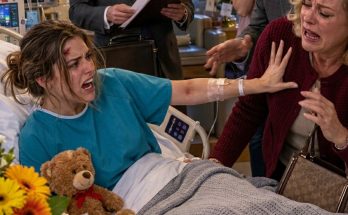
I changed my estate from a hospital bed, but the real decision was not punishment — it was admitting that being family had never guaranteed they would show up when I truly needed them
Part 16 of 16

One Comment on “PART 16 – Decades after those nine unanswered calls, I understood that the real cost to my family was never the money I removed — it was the certainty that I would always be available while asking nothing in return”