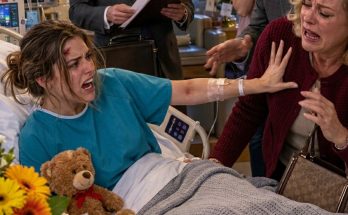
The diagnosis came when I was sixty-eight.
Breast cancer.
Early stage.
Treatable.
Still cancer.
The word collapsed time.
Ben.
Hospital.
The accident.
My mother’s heart attack.
Every medical room I had ever known seemed to enter at once.
My doctor explained the plan.
Surgery first.
Then, depending pathology, radiation and possibly medication.
No immediate reason to expect worst.
But fear does not obey probability charts.
I drove home and sat in the car for twenty minutes.
Then I did something younger Miranda would not have done.
I called Lauren.
Not:
Can you talk?
Not:
I have some news.
I said:
“I have breast cancer. It appears early. I need you to come over tonight if you can.”
Silence.
Then:
“I’m coming.”
No question about urgency.
She arrived in forty minutes.
Caleb stayed with Ethan.
Lauren walked in, hugged me, and cried harder than I did.
“Tell me everything.”
I did.
Then I called Naomi, who had moved back years earlier.
Then Julian’s successor Sofia.
Then foundation leadership only as needed.
No secret test.
No counting calls.
I told people what I needed.
That decision changed the entire experience.
Lauren attended the surgical consult because I asked.
Naomi came to oncology planning.
Caleb drove me once when Lauren had a work conflict.
Ethan, then in college, called.
No one had to guess.
Before surgery, Lauren said:
“I’ll stay with you the whole first week.”
I answered:
“Two nights. Then I want the home nurse I hired.”
She frowned.
“I can stay.”
“I know.”
“Then why pay?”
“Because you are my sister, not my medical staff.”
She rolled eyes.
“You say that like it’s a slogan.”
“It should be.”
I had learned from caring for Dad and Mom.
Professional support protects family relationships.
Lauren could sit with me, make tea, watch terrible television.
The nurse could handle wound assessment and medication instructions.
No need blur.
Surgery went well.
The tumor was smaller than imaging suggested.
Nodes clear.
I needed radiation but not chemotherapy.
Relief.
Still exhausting.
Radiation fatigue humbled me.
I had spent decades being “the strong one.”
Cancer did not care.
One afternoon I called Lauren.
“I need groceries.”
She answered:
“Text list.”
No performance.
She dropped them off.
Left because I was tired.
Perfect.
Another day I wanted company.
I said:
“Can you stay?”
She did.
This was the family repair I had never been able to buy with inheritance.
Not constant presence.
Responsive presence.
Specific.
Chosen.
During treatment, I revisited estate plan again.
Not because I thought I was dying.
Because cancer makes mortality concrete.
Sofia asked:
“Do you want to change beneficiaries because of the diagnosis?”
“No.”
“Good.”
I laughed.
“Why good?”
“Because I’d rather changes reflect values than panic.”
Same lesson as hospital decades earlier.
We reviewed.
My foundation had grown substantially but was professionally governed.
Lauren had a modest fixed bequest in current plan, plus Ethan a separate education/early-adult support provision if I died while he was still young. By then he was nearly finished college, so those terms could sunset.
I adjusted not based on who brought groceries.
I increased charitable remainder slightly because my personal assets had grown and family needs were stable.
I left Lauren enough to be meaningful.
Not millions? Could be substantial but not dominating. Let's say a meaningful fixed amount and family heirlooms, not percentage of entire estate. No need exact in story.
I also created a small bequest for Naomi because decades of friendship mattered.
Was that unfair to family?
No.
Estate is expression, not blood ranking.
I told no one exact.
Good.
Then came the most emotional part.
I had to choose healthcare proxy update.
Naomi was aging too.
I trusted Lauren now.
Could I name her?
This was not a reward.
It was technical responsibility.
She had shown capacity under stress.
She understood my wishes.
I asked her.
“Would you be willing to serve as healthcare agent if I can’t decide?”
She went silent.
Then:
“Yes.”
“Read the directive first.”
She did.
We discussed.
No heroic treatment at all costs if prognosis poor.
Pain control.
Hospice preferences.
Organ donation where applicable.
No guilt.
Lauren cried.
“This feels like you’re trusting me again.”
I corrected gently.
“I trust you in this role. That is not the same as restoring the past.”
She nodded.
That nuance mattered.
Trust can be specific.
Not total.
Not zero.
She became healthcare proxy primary.
Professional fiduciary remained financial.
Separate roles.
No inheritance implication.
When radiation ended, we celebrated with lunch.
No bell-ringing video.
I did not want social media.
Ethan came.
Naomi.
Lauren.
Caleb.
Small.
I was cancer-free by follow-up standards over time, with ongoing surveillance.
Good.
The experience changed family.
Not through fear alone.
Through practice.
Lauren had one chance to show up differently.
She did.
I had one chance to ask differently.
I did.
Both mattered.
Years earlier, I had called nine times without clear text beyond hospital context and one “urgent?” reply. To be fair, my calls should have been enough. Still, now I knew direct request reduces ambiguity.
I told Lauren once:
“Part of me wanted to see if you’d notice without me asking.”
“That’s terrible.”
“I know.”
“Did you?”
“At first.”
“Why?”
“Because I wanted proof.”
She squeezed my hand.
“Did you get it?”
“Yes. But I’m glad I asked instead.”
Healthy relationships should not depend on secret tests.
That lesson came late.
Better late.
Cancer also softened my relationship with money further.
I paid for excellent care not fully covered.
No guilt.
I took a recovery trip once medically cleared.
Maine coast.
Quiet.
No big family entourage.
I sat by water and thought about the lake house I had sold.
Places can matter and still be left.
Bodies too change.
Roles.
Plans.
The foundation established a new grant for women returning to work after serious illness, but I insisted it not be named after me.
Was that ego disguised as humility? Maybe partly.
I simply preferred privacy.
The board approved based on data, not founder emotion alone.
Good.
My health remained stable.
Life resumed.
But the hospital no longer symbolized only abandonment.
It also held a newer memory:
Lauren in the chair beside me after surgery.
No phone unanswered.
No money discussion.
Just sister.
That did not erase nine calls.
It placed something beside them.
Two truths.
That is often the best healing offers.
Cancer treatment also forced me to confront mortality without converting every fear into paperwork.
The first week after diagnosis, I wanted to review will, sell assets, update foundation, write letters, organize photos—all at once.
Control response.
Sofia said:
“Your estate is already current.”
Dr. Morgan said:
“You are allowed to be scared without turning fear into tasks.”
I hated both.
Tasks were how I coped.
So I tried something unfamiliar.
I sat with Lauren and said:
“I’m scared.”
No solution.
She said:
“Me too.”
That was it.
We did not open spreadsheet.
The world did not end because feeling remained unsolved for ten minutes.
This was profound for me.
I had spent adulthood translating emotion into action:
fear into planning,
love into money,
hurt into estate changes,
grief into work.
Sometimes action necessary.
Sometimes feeling needs company.
That hospital experience decades earlier had taught me I needed presence.
Cancer finally taught me to ask for presence directly.
No inheritance involved.
No problem to fix.
Just sit.
That may have been the simplest and hardest lesson of all.
Click here to continue reading: PART 14: Ethan became an adult and asked me directly what happened between his mother and me, forcing me to decide whether truth could be told without recruiting the next generation into old resentment
I changed my estate from a hospital bed, but the real decision was not punishment — it was admitting that being family had never guaranteed they would show up when I truly needed them
Part 13 of 16