The next January came with snow.
Brennan saw it collecting along the edge of his office window while he waited for an elevator.
Almost a year had passed since Back Bay Station.
He still remembered the pink coat.
He remembered the cardboard sign.
He remembered the charge that had appeared forty-seven minutes after he handed Grace his card.
$8,742.63.
He had once thought of the amount as a shock.
Now he thought of it as the beginning of an uncomfortable education.
The final hospital accounting had included insurance corrections and a partial credit after a billing review.
It had not erased all the expenses Mateo's family faced.
It had helped them stabilize while they navigated care and housing costs.
Sofia had kept working.
Mateo continued receiving appropriate follow-up care.
His progress belonged to his family and medical team.
Brennan did not treat it as proof of his generosity.
At Ashford Global, the patient assistance pilot had completed a full review cycle.
Some processes improved.
Other proposals were revised or rejected when evidence failed to support them.
The board approved a next phase with a defined budget, oversight, and regular public reporting of aggregate results.
Personal patient stories were excluded unless individuals chose to participate under appropriate privacy protections.
Montgomery did not support every element.
He did vote for the revised plan.
After the meeting, he told Brennan his mother would have been pleased to see the effort.
Brennan thanked him.
He did not ask for more.
Their relationship had improved in small ways.
They now had dinner every few weeks.
Montgomery still made assumptions Brennan challenged.
Sometimes he listened.
Sometimes he argued.
They kept showing up.
Grace's year had been far less visible.
She went to work each morning.
She balanced grocery prices.
She attended Lily's school events.
She paid rent and kept a folder of receipts.
She was not wealthy.
She still worried about emergencies.
But her life no longer changed address from night to night.
Her apartment smelled like warm bread on weekends.
The basil plant had finally produced enough leaves for a little pasta sauce.
Lily said it tasted like grass.
Grace told her it was an expensive culinary achievement.
They both laughed.
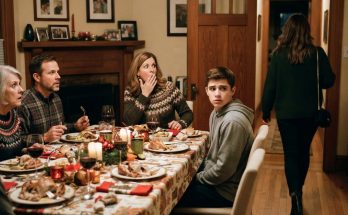
One Saturday, Grace invited Brennan, Leah, Sofia, and Mateo for lunch.
She did not ask Brennan to pay for anything.
She made soup, sandwiches, and a large bowl of cut fruit.
The table was still small.
They borrowed two folding chairs from a neighbor.
Brennan arrived carrying a packet of art paper for Lily.
He had asked Grace before buying it.
Lily thanked him and immediately began drawing.
Mateo helped her make a picture of a house.
It had orange walls.
A purple door.
A dog sitting in the yard.
Grace looked at it and shook her head.
“We don't have a dog.”
“Yet,” Lily said.
Everyone laughed.
Over lunch, Leah asked Grace about her new responsibilities at the clinic.
Grace described the training and how much she still needed to learn.
Sofia talked about Mateo's school schedule and her own work.
Brennan answered questions about his rooftop garden.
Lily wanted to know whether the plants needed tiny seat belts during storms.
He admitted he did not know.
After the meal, Brennan offered to help with the dishes.
Grace gave him a towel.
“You can dry.”
He followed instructions.
The plates were mismatched.
The counter was narrow.
He knocked a spoon onto the floor.
Lily laughed from the table.
“Mr. Brennan needs practice.”
“I do,” he agreed.
When the guests left, Grace stood at the window watching them walk to their cars.
Lily was tired from the excitement.
She climbed onto the sofa with her rabbit.
“Mom?”
“Yes?”
“Are we going back to the train station?”
Grace turned around.
“Not today.”
“Ever?”
“We might take a train from there someday. But we're not planning to sleep there again.”
Lily considered the answer.
“What if something bad happens?”
“Then we'll ask for help and use the plans we've made.”
“Like Leah?”
“Yes.”
“And Sofia?”
“Yes.”
“And Mr. Brennan?”
“If we need to ask him something, we can. But we have other people and resources too.”
Lily nodded.
She liked knowing there was more than one person she could call.
Grace liked it even more.
That evening, Brennan returned to his penthouse.
He took off his coat and stood near the harbor window.
A framed photograph of Elizabeth sat on the shelf.
He picked it up and told her, quietly, about the lunch.
He knew she could not answer.
He said it anyway.
Then his phone rang.
Montgomery was calling about dinner the following week.
Brennan answered.
They discussed a restaurant and a time.
His father asked whether the pilot report would be available before the next board meeting.
“Yes,” Brennan said.
“I'll read it.”
“Good.”
There was a pause.
Then Montgomery asked, “How was your weekend?”
Brennan smiled.
“Good.”
He described lunch without revealing anything Grace had asked him to keep private.
Montgomery listened.
He did not make a joke about people wanting something.
He simply said, “I'm glad you had a good day.”
After the call, Brennan sat in the reading chair his mother had once used.
He thought back to the first morning at the station.
He had wanted to give a stranger the freedom to spend without limits.
He had imagined that freedom would reveal her character.
Instead, it had revealed his own limitations.
Grace was never a perfect symbol of anything.
She had made complicated choices.
She had spent money intended for her own household on another family.
She had needed professional help, not admiration alone.
She had worked, made mistakes, corrected them, and endured ordinary setbacks.
She had not become wealthy through Brennan's kindness.
She had become more secure through sustained support, employment, community, and her own decisions.
Brennan understood now that help was not a test someone had to pass.
He could give without deciding another person's worth.
He could also set limits without calling every person in need dishonest.
The lesson was not as simple as his father's old warnings.
Real life rarely was.
Across the city, Grace closed Lily's bedroom door halfway.
Her daughter had requested a little light from the hall.
Grace returned to the kitchen and checked tomorrow's calendar.
School.
Clinic shift.
Groceries.
Library books due Friday.
Nothing grand.
Nothing impossible.
She put a clean cup by the coffeemaker.
Then she looked at the two brass keys hanging beside the door.
They belonged to her apartment.
She had obtained them through applications, paychecks, appointments, and the help of people who respected her choices.
She touched one key with her finger.
A year earlier, she had been afraid of the next night.
Now she was thinking about breakfast.
From the bedroom, Lily called softly.
“Mommy?”
Grace went to the door.
“Yes, sweetheart?”
“Pancakes tomorrow?”
Grace smiled.
“We have time.”
She switched off the kitchen light.
The door closed gently behind her.
After the January lunch, Grace found a folded note beneath the fruit bowl.
It was from Brennan.
He had written only a few lines.
Thank you for inviting me into your home.
I know you worked hard to make this possible.
I'm glad Lily has a place to read and grow.
There was no money in the envelope.
No gift certificate.
No proposal for a bigger apartment.
Grace read the note and set it beside her framed certificate.
She appreciated its restraint.
The following morning, she took Lily to school in light snow.
They stood at the bus stop beneath a narrow shelter roof.
Lily counted the flakes collecting on the railing.
A woman nearby was struggling to fold a stroller while holding a crying baby.
Grace asked whether she needed a hand.
The woman gratefully accepted.
Grace held the folded stroller while the mother settled the child.
When the bus arrived, they boarded together.
It took less than a minute.
There was no audience.
There was no card.
Grace did not feel that the woman owed her anything.
At the school door, Lily squeezed her hand.
“Mom, you helped that lady.”
“She needed another hand.”
“Like when people helped us?”
“Something like that.”
Lily nodded and ran toward her classroom.
Grace watched until she disappeared through the door.
Then she went to work.
At the same hour, Brennan entered the company's main conference room.
A new set of reports waited at every seat.
He opened the first one.
It included successes, failures, costs, and unanswered questions.
He was relieved to see the unanswered questions still listed.
No one had tried to disguise them.
Nisha began the meeting by asking staff what they had learned.
Craig described the budget.
Daniel reviewed next steps.
Brennan listened before speaking.
A year earlier, he might have opened with a demand for a cleaner number.
Now he asked which parts of the process people still found difficult to navigate.
The discussion took longer.
He considered it time well spent.
When the meeting ended, he stopped at the window overlooking the city.
A train moved along the distant tracks.
He could not see the passengers.
He no longer assumed he knew their stories.
THE END
The End
Read more original stories on Feel Every Story.
Brennan Ashford Gives a Stranger His Black Card and Sees a Hospital Charge He Cannot Explain
Part 16 of 16