Preparing the house for sale took longer than I expected.
The realtor recommended small repairs and careful cleaning.
Nathan offered to help on weekends.
Emily brought boxes and labels.
Laura brought patience, which turned out to be the most useful thing of all.
We began in the attic.
There were holiday decorations, broken lamps, and a cardboard box of letters Gary had written during our first year of marriage.
He had worked nights then.
I had worked mornings.
We left notes for one another in the kitchen.
One said he couldn't wait until we had enough money to buy a home with a yard.
Another promised we would always be on the same side.
I sat on a dusty trunk holding those pages.
Laura saw my face.
"Mom?"
"He used to be very sweet."
She sat beside me.
"I believe you."
"I don't want you to think every good thing was fake."
She looked at the letter.
"I don't. But good memories don't mean you have to stay."
I folded the pages and placed them in a small box marked personal.
We found photographs from school recitals, baseball games, graduations, and the first Thanksgiving in the house.
We found the children's old report cards.
I teased Nathan about the teacher who said he needed to talk less during class.
He claimed the teacher had misunderstood his leadership skills.
We laughed so hard that dust rose from the rafters.
The following weekend, Gary came by to collect agreed personal items.
Maya had suggested we set a time and keep written records.
Emily was present because I preferred not to be alone for the exchange.
Gary packed his tools, fishing gear, and clothing.
He paused by the pantry door.
"Remember when Laura measured herself twice in one day because she wanted to be taller?"
I smiled.
"She stood on her toes the second time."
He laughed quietly.
Then he looked at the marks.
"You're really selling it."
"Yes."
"I thought you'd stay."
"A new owner can love it too."
He touched the doorframe and then withdrew his hand.
I could see regret in his face.
That did not require me to change course.
Later, Emily asked whether having him in the house had been difficult.
"Very," I said.
"Do you want to talk?"
"Maybe tomorrow. Today I'd like to finish packing the dishes."
She nodded and found more newspaper.
The home inspection identified two repairs we needed to negotiate.
A roofer provided a written estimate.
The realtor explained the difference between repairing the problem before listing and offering a credit at closing.
I chose the option that fit the budget and sale schedule.
For years, Gary had handled conversations with contractors by speaking over them.
I found that most people answered straightforward questions if I asked patiently.
I requested written bids.
I compared warranties.
I kept receipts.
The process reminded me of the lottery ticket in a different way.
Paperwork did not eliminate every risk.
It made decisions easier to explain afterward.
One afternoon, a young couple came to view the house.
They had a toddler who wandered toward the garden fence.
The mother apologized as she hurried after him.
I watched from my car across the street.
The child laughed at a fallen leaf.
I hoped they would like the yard.
A week later, they submitted an offer.
It was below the listing price but supported by comparable sales.
We negotiated through the agents.
The buyer requested a credit for the roof work.
We reached terms.
There were inspections, financing deadlines, title checks, and final signing arrangements.
Nothing happened instantly.
That was strangely comforting.
I had time to say goodbye.
On the last evening before closing, I walked through the empty rooms.
The refrigerator was gone.
The pineapple magnet was in my purse.
The walls showed pale rectangles where photographs had hung.
I stood at the kitchen window and imagined nineteen years of Friday tickets below that magnet.
I thought of the mornings Gary sat with his coffee.
I thought of the children racing through the hallway.
I thought of the last breakfast when he told me I would have nothing.
Then I turned off the light.
At the closing, I reviewed the settlement statements before signing.
The proceeds were distributed according to the title requirements and the pending divorce arrangements.
A portion remained subject to agreed handling where necessary.
I did not walk out carrying a suitcase of money.
I carried a folder of signed documents and a paper cup of water.
Emily drove me to my new rental apartment.
It was on the first floor of a quiet building near Ruth.
There was a small patio with enough light for tomato pots.
I unpacked the kettle first.
Then I hung the pineapple magnet on the new refrigerator.
It looked ridiculously cheerful against the plain white door.
Emily stood beside me.
"Are you happy here?"
I looked around at the boxes.
"I think I will be."
She hugged me.
That night, I slept without listening for Gary's truck.
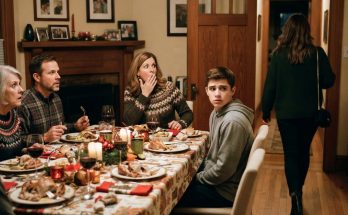
The last family dinner at the old house was deliberately simple.
I made chicken and rice.
Emily brought salad.
Nathan brought a pie.
Laura brought paper plates because most of mine were already packed.
We sat among cardboard boxes and laughed about the rooms that had once seemed enormous.
The children took turns describing their favorite memories.
Emily remembered building a blanket fort in the living room.
Nathan remembered the year we raised a hurt robin until it could fly.
Laura remembered learning to ride a bicycle on the sloping driveway.
I remembered everything they said.
I also remembered the arguments and the worrying years.
I did not mention those that night.
Not because I wanted to hide them.
Because this gathering was about thanking the house for sheltering us.
After dinner, we walked through the rooms together.
Each child chose a few objects with sentimental value.
Emily took the ceramic mixing bowl we used at holidays.
Nathan took his grandfather's wooden ruler.
Laura asked for the small hallway mirror.
We wrote the choices down so no one would later wonder where something had gone.
The grandchildren chose a stack of old board games.
One wanted the pineapple magnet.
I laughed.
"That one is coming with me."
She considered this.
"Can I have it when you're very, very old?"
"We can discuss it then."
Everybody laughed.
Later, after the children left, I sat alone on the kitchen floor.
I cried for the first time in several days.
I cried for the home we'd built.
For the marriage that had ended.
For the young woman who thought love was enough to make every hardship bearable.
Then I got up, washed my face, and finished packing the cutlery.
Grief had its place.
It did not have to decide the moving schedule.
I found one final object beneath the kitchen sink while emptying the cupboard.
It was a small toolbox with a broken latch.
Gary had given it to me when we bought the house.
"Your own tools," he said, teasing me because I kept borrowing his screwdriver.
Inside were picture hooks, a small hammer, tape, and a measuring pencil.
I considered sending it with his belongings.
Then I remembered that it had been mine all along.
I cleaned the rust from the hammer and packed everything carefully.
At the apartment, I used the tools to hang the watercolor from the coast.
The frame was slightly crooked.
I adjusted it twice.
Then I stepped back and admired the room.
A gift could remain useful even after the relationship that produced it had ended.
Click here to continue reading: PART 12: The Judge Reviews the Agreement While the Lottery Claim Remains on Hold
The Signature Gary Could Not Explain at the Lottery Claims Counter
Part 11 of 16