By the second autumn after Walt died, I had settled into a life that no longer revolved around defending the past.
I still missed him when I opened a jar he would have loosened for me.
I missed his hand across the car seat.
I missed hearing him clear his throat before offering advice I had not requested.
But I also had friends from the food pantry.
I had a train trip behind me and another penciled into the calendar.
I had grandchildren who rang my doorbell with school projects and questions about history.
The little apartment felt like home.
Ruth and I completed my updated estate plan.
It supported my future care and made the intended distribution clear.
I chose to treat my children fairly under the documents, while allowing for their different circumstances through openly explained arrangements where appropriate.
I did not attach conditions about holiday invitations, phone calls, or who had offered a bed.
Those would have turned my affection into a contract.
I did establish modest education gifts for the grandchildren through appropriate accounts, with professional advice about their rules.
I also supported a local transportation assistance program that helped older people get to medical appointments.
That gift reminded me of Walt's company without trying to preserve it as a monument.
The most important decision was simpler.
I would explain my plans to my children while I was alive.
I invited each family to my apartment on separate afternoons.
I told them what the documents generally provided, who the professionals were, and where important records were stored.
I emphasized that my savings were first for my own care.
Nobody was entitled to budget around an inheritance.
Michael nodded.
He asked if I wanted help organizing the paperwork digitally.
I agreed, with the lawyer's guidance.
Stephanie asked whether I was happy with the medical decision-maker arrangements.
I said yes.
Danny asked if I needed anything repaired.
I pointed to a kitchen drawer that stuck.
He fixed it in twelve minutes.
Then he stayed for lunch.
One afternoon I found Walt's old watch in its tin.
I had finally had it serviced.
Its hands moved steadily now.
I placed it on my wrist for a short walk.
The band was too loose, so I carried it back inside.
There would be time to decide who should keep it later.
I no longer needed to make every object a verdict.
On a quiet evening, I sat at the kitchen table and looked at the photograph Danny had given me.
I thought about those first three phone calls.
Michael's awkward links.
Stephanie's thoughtless suggestion.
Danny's immediate promise of a bed.
The responses had revealed something about each of them.
But not everything.
They had also revealed my fear of being ordinary and dependent after a life spent helping others.
I had needed to believe I could test love and receive a number back.
Now I knew better.
Love was in Danny giving me a bed.
It was also in Kayla telling me the bed had cost them comfort.
It was in Michael learning to ask a second question.
It was in Stephanie returning for her notebook and trusting me not to open it.
It was in accepting that none of us had behaved perfectly.
I closed the album and called my children one at a time.
I did not tell them there was an emergency.
I did not mention money.
I asked how their day had gone.
Then I listened.
When Danny answered, he was at the garage.
He said Ben had scored a goal at soccer and Kayla had passed her training exam.
I told him I was proud of them.
“Anything you need, Mom?”
“No, sweetheart.”
I looked across the room at Walt's photograph.
“I just wanted to hear your voice.”
Danny was quiet for a moment.
Then he said, “You can call for that anytime.”
I sat by the window long after we hung up.
The maple leaves had turned gold.
The watch ticked softly on the table.
Nothing extraordinary happened.
That was enough.
One morning, I found a grocery receipt tucked inside Walt's old jacket.
The ink had faded, but I could still make out milk, bread, apples, and a bag of coffee.
I sat at the table holding it.
When I had first learned about the business sale, I thought our greatest achievement was knowing how to preserve what we earned.
The receipt reminded me of another achievement.
We had made thousands of ordinary meals together.
We had cared for children through fevers, school projects, disappointments, and celebrations.
We had sometimes been mistaken and sometimes forgiven.
The money mattered.
It made my future safer.
It meant I could pay for care if my needs changed.
It let me give thoughtfully to causes that mattered to us.
But the receipt represented a life money could not replace.
I put it in Walt's journal with the photographs.
Later I met the family at the park for Owen's birthday.
The children were playing on a field near the picnic tables.
Stephanie had brought sandwiches.
Michael was trying to assemble a folding chair that came without instructions.
Danny offered advice from a distance and was promptly told to help or be quiet.
Kayla handed me a cup of lemonade.
We watched Ben chase a ball across the grass.
Michael finally got the chair upright.
Everyone applauded.
He bowed dramatically.
For a moment I thought about calling Walt to describe the scene.
I still had those impulses.
They did not mean I had failed to move forward.
They meant I had loved him for a long time.
I sat in the folding chair and listened to my family argue cheerfully about whether the birthday cake should be cut before or after the games.
No one mentioned the money.
No one asked for proof of devotion.
We were simply together.
And when it was time to leave, I knew I could go home alone and still belong to them.
On the anniversary of Walt's death, I went to the cemetery alone in the morning.
I carried a small bunch of yellow flowers.
The grass was wet with dew.
I cleaned the stone and sat on the bench nearby.
I told him about Michael's work, Stephanie's new job, and Danny's promotion.
I told him the boys were growing fast.
I told him I had taken the train trip we'd planned and that he had been right about the mountains.
Then I told him about the lie.
I had spoken of it before, but never so plainly.
“I thought I could make them prove they loved me,” I said.
“I ended up making them wonder whether I trusted them.”
The cemetery was quiet.
I did not expect forgiveness from a headstone.
I had already received opportunities to make things right from the living.
I placed the flowers carefully and stood.
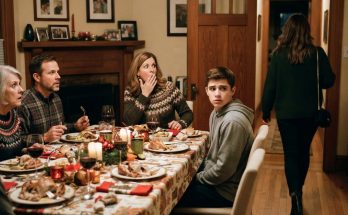
That afternoon, I joined the family for lunch.
We ate sandwiches at a long table near the window.
Nobody asked how much money remained.
Nobody needed to.
They knew I was secure and that my plans were in order.
They also knew I still wanted their company.
Before I left, Olivia gave me a photograph she had taken during our walk.
It showed me laughing with my head tipped back.
I looked older than I felt.
I liked it anyway.
I placed it beside the picture of Walt when I got home.
The two images belonged together.
One showed the life I had loved.
The other showed the life I was still living.
I still sometimes took out the cream envelope Walt had written for Danny.
With my son's permission, I copied one sentence into my journal: Don't let her turn gratitude into debt.
I read it whenever I felt tempted to repay an uncomfortable conversation with a gift.
Then I closed the book and did something smaller.
I called a friend.
I cooked supper.
I asked how a grandchild's exam had gone.
I learned to let care be a practice rather than a transaction.
I could not undo the three calls I had made after the funeral.
I could choose how to speak to my family now.
THE END
The End
Read more original stories on Feel Every Story.
The Three Calls I Made After Walt’s Funeral Changed the Way I Saw My Children
Part 16 of 16