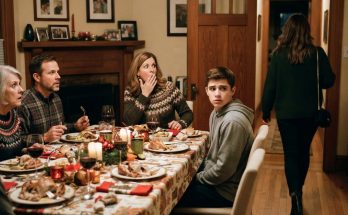
After my husband passed away, I called my three children one by one and told them I'd lost everything and needed a place to live.
My oldest said he didn't have room in his five-bedroom house.
My daughter asked if I'd looked into charity housing.
My youngest, who fixed cars and lived in a two-bedroom apartment, said, “Come tonight, Mom. You'll take our bed.”
None of them knew their father had left me $3.8 million.
Walt had sold his transport company two years before the cancer was diagnosed.
We told no one outside the people who handled the sale.
We remained in the same little house, with the same dented mailbox and the sedan whose passenger window stuck when it rained.
We clipped coupons because we liked knowing what things cost.
Sometimes Walt brought home a loaf of discounted bread and held it up as though he had won a prize.
“Six dollars saved,” he would announce.
“Don't spend it all at once,” I'd answer.
We had forty-six years of conversations like that.
Losing him meant losing someone who understood why I laughed before I finished a sentence.
At the funeral, Michael stood beside the door greeting people he recognized from his business network.
Stephanie asked the funeral director whether the family had ordered the upgraded flowers.
Danny carried chairs, washed dishes, and brought me a sweater when he noticed my hands shaking.
I loved all three.
I had raised them through the same kitchen and taught them the same words about kindness.
I couldn't understand why adulthood had carried them in such different directions.
A week after the service, I sat at our kitchen table with Walt's reading glasses.
The frames had a loose screw.
I had meant to get them repaired.
Now there was no reason.
I dialed Michael first.
He answered on the fourth ring.
I told him the medical bills had taken everything and the bank was taking the house.
That was not true.
The house was paid off.
The inheritance was secured under the estate plan Walt and I had made together.
I told myself I wanted to know which child would offer shelter without expecting a reward.
I did not yet admit that pretending to be destitute was an unfair way to ask.
Michael went quiet.
Then he mentioned Jenna's mother, the guest bedroom that had become a home office, and how difficult things were that quarter.
“I'll email you some senior apartment links, Mom.”
He did.
There was no message attached.
Stephanie sounded distressed until I said there was nothing left.
She asked about shelters and said that some community programs were lovely.
Then she remembered the children's tennis practice.
Danny barely let me finish.
“Come tonight.”
“You have two boys and hardly any room.”
“Then we'll make room.”
“What if I can't pay you?”
“Mom, that's not why you get a bed.”
He arrived forty minutes later, grease on his hands and a clean blanket folded on the passenger seat.
Before getting out, he called Kayla and told her I was coming.
I heard her voice through the speaker.
“Tell her to bring her blue cardigan. It's cold up here.”
I had spent the afternoon rehearsing what I would say if she sounded unhappy.
I was unprepared for her asking whether I preferred oatmeal or eggs.
I locked our front door and left one small suitcase inside Danny's truck.
The rest of the clothes remained in the bedroom where Walt's slippers still sat by the dresser.
I told myself it would only be for a few nights.
But Danny and Kayla had already begun moving their own bedding into the living room.
Their sons, Owen and Ben, helped carry my overnight bag.
The youngest asked whether I would stay until his spelling test.
“Maybe,” I said.
“Good. Dad only knows how to spell engine.”
Danny laughed so hard he nearly dropped my suitcase.
I sat on their bed that first evening, looking at photographs taped to the wall.
There was one of Walt teaching Danny to change a tire.
I didn't sleep for a long time.
I listened to the laundromat downstairs, the boys whispering through the thin wall, and Danny settling onto a couch whose springs protested every movement.
For the first time since the funeral, I wasn't alone with my husband's absence.
That comfort was real.
So was my guilt.
I had let four people rearrange their lives for a story that wasn't true.
I kept telling myself I would explain soon.
But then morning came, and Kayla placed an extra mug at the table without asking.
I found I couldn't quite bring myself to leave.
On the way to Danny's apartment, we passed the old company yard.
The sign had been replaced after the sale.
There was a new logo painted in blue letters above the gate.
Danny slowed at the traffic light.
“Still strange seeing someone else's name there,” he said.
“Your father said the same thing.”
“He liked that place.”
“He liked the people.”
Danny remembered riding in Walt's truck on school holidays.
He remembered eating sandwiches on an upside-down bucket while mechanics worked nearby.
I remembered the other side of those days.
The nights Walt sat at the kitchen table wondering whether he could make payroll.
The years when I repaired clothes instead of replacing them.
The arguments over whether it was safe to borrow enough to buy another truck.
Neither of us had been born wealthy.
We had learned to protect money because we remembered not having it.
Now the sight of Danny's worn boots made me feel both proud and ashamed.
I wanted to tell him we could change everything.
But I had already begun my experiment.
So I sat beside him, carrying my secret like a suitcase heavier than the one in the truck bed.
At his building, a tenant was struggling with a stroller outside the elevator.
Danny set down my bag and helped her lift it over the broken threshold.
She thanked him by name.
He asked whether the baby had been sleeping better.
The whole exchange lasted less than a minute.
I noticed that he did not seem to consider it a favor worth remembering.
Inside the apartment, Kayla had changed the sheets and cleared one dresser drawer for me.
A towel lay folded at the foot of the bed.
On top was a paper card made by Ben.
It said, in uneven blue letters, WELCOME GRANDMA.
He had drawn six people holding hands, although there were only five of us in the household before I arrived.
I held the card against my chest.
At supper, Danny asked how long the bank had given me to leave the house.
My hand froze above my plate.
I had not expected practical questions.
I said the paperwork was still being reviewed.
Danny offered to help me call a housing counselor.
I told him I wanted to rest first.
That small lie was followed by another when Kayla asked whether I needed help applying for benefits.
By bedtime, I was already building the kind of story that would become harder to untangle with each passing day.
I opened my phone and reread Michael's email.
The three housing links glowed against the screen.
I wondered whether he had spent five minutes choosing them or whether he had searched longer than I knew.
I didn't call to ask.
That was my first missed chance to replace suspicion with a conversation.
Before leaving the house, I wrote down the names and numbers of my doctors on a card.
I had always kept Walt's appointment details in his old calendar.
Now I needed one for myself.
The simple task brought me close to tears.
I sat on the stairs and listened to the refrigerator humming in the kitchen.
That sound used to mean somebody would be home soon.
I checked the locks twice and placed the card in my purse.
Danny did not hurry me.
He waited at the truck, giving me enough time to say goodbye to the rooms without demanding an explanation.
I was grateful for that kindness long before I understood its cost.
Click here to continue reading: PART 2: Three Months in Danny’s Crowded Apartment Taught Me What My Quiet Test Was Costing
The Three Calls I Made After Walt’s Funeral Changed the Way I Saw My Children
Part 1 of 16