The unemployment hearing took place by video.
I cleared the dining table and positioned my laptop beside a glass of water.
Melissa took the girls to her sister's house so the room would stay quiet.
Rafael had helped me prepare, but I represented myself during the administrative proceeding.
The hearing officer explained the process.
Gavin appeared from his office.
He wore the same navy tie he had worn the morning he fired me.
His statement was confident.
He said I had been assigned to an essential meeting.
He said I failed to attend.
He claimed no adequate notice was given.
Then the officer asked about the text message.
Gavin paused.
“I don't recall seeing that in time.”
My stomach tightened.
Priya had already submitted a short signed statement.
It said she received my message before the meeting and told Gavin about it.
The officer reviewed the timestamp.
Gavin shifted in his chair.
He argued that notifying a coworker was not the same as receiving permission to miss a meeting.
The officer asked why I was late.
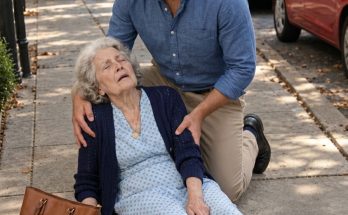
I explained the roadside collapse.
I gave the time of my emergency call and when the ambulance left.
I didn't dramatize what had happened.
I told them the woman's breathing was labored.
I said I remained because emergency services asked me to describe her condition and remain available until they arrived.
The hearing officer asked whether I had prior attendance warnings.
There were none.
Gavin acknowledged that.
He also acknowledged I had submitted the presentation in advance.
The hearing ended without a decision.
I closed the laptop and sat in the quiet kitchen.
My hands were shaking.
I called Melissa.
“How was it?”
“Hard.”
“Did you say everything?”
“I think so.”
“Then that's all you could do today.”
The written decision arrived the following week.
The agency found I had not been discharged for disqualifying misconduct under the applicable unemployment standard.
My claim was approved, subject to ordinary processing.
It did not order Gavin to apologize.
It did not restore my job.
It did not decide every employment-law question.
But it corrected one important description of what I had done.
I had not simply abandoned my responsibilities.
That evening, Eleanor called to ask how my interview had gone.
I told her about the decision first.
“Good,” she said.
“That's all?”
“What would you like? A parade?”
I laughed.
“Maybe a small one.”
She promised to wave a dish towel from her porch the next time I drove by.
It was such an ordinary joke that I had to sit down before I could answer.
Before the hearing, I made three copies of the evidence packet.
One included the message timestamps.
One included the emergency call confirmation.
One included a chronology in plain language.
Rafael had warned me not to submit every emotional note I had written in my first angry days.
So I removed the pages where I had called Gavin unfair and heartless.
Those feelings belonged in conversations with Melissa.
The hearing needed facts.
I practiced answering questions aloud while walking around the kitchen.
Why did you stop?
Because I saw a person collapse.
Why didn't you drive away once you called?
The dispatcher asked me to remain and report what was happening until emergency responders arrived.
Did you know you would miss the meeting?
Yes. That is why I notified the team.
Had anyone explicitly authorized the absence?
There was no opportunity to request approval before responding to the emergency.
The answers were simple.
My fear made them feel complicated.
On the morning of the hearing, Melissa left me a note beside the laptop.
Tell the truth. We love you.
I folded it and put it in my pocket.
The hearing officer had a calm voice.
She explained that she would review information under the applicable unemployment rules, not determine whether Gavin was a good person.
I appreciated the distinction.
At one point, Gavin mentioned the value of the potential account.
The officer asked whether the amount changed the reason I had given for missing the meeting.
Gavin said it demonstrated the seriousness of my absence.
The officer wrote something down.
I couldn't tell whether she agreed.
When she asked me for my final comments, I resisted the urge to deliver a speech.
“I recognize the meeting mattered,” I said. “I prepared for it and warned my team as soon as I could. I also believed the emergency in front of me required an immediate response.”
Then I stopped talking.
It felt strange to leave words unsaid.
Afterward, I walked around the block before calling Melissa.
The air was cool.
A man walked his dog past a bus shelter.
Two children raced each other to the corner.
The world hadn't stopped for my hearing.
It would keep moving whether I won or lost.
At home, I washed the dishes.
Then I applied for another position.
Waiting for a decision didn't mean putting the rest of my life on hold.
When the approval came, I called Priya first.
She went quiet.
“I'm glad,” she finally said.
“So am I.”
She confessed that she had been afraid her statement would cost her job.
I thanked her for providing only what she had actually witnessed.
“That's all I could do,” she said.
“It was enough.”
After the hearing, I found myself replaying one small moment.
The officer had asked Gavin whether the presentation materials were available to the rest of the team.
He answered yes.
Then he said they were not prepared to deliver my section.
I wanted to interrupt.
The officer instructed us to wait for our turns.
I did.
When she asked for my response, I explained that we had rehearsed the deck together the previous afternoon.
I didn't say anyone would have done it perfectly.
I said there was a backup plan in the written agenda.
The distinction felt important.
An emergency could still inconvenience people.
It didn't mean the person responding to it deserved every consequence that followed.
Once the written decision arrived, I read it with Rafael.
He cautioned me not to treat the finding as a universal legal judgment.
Different processes could ask different questions and apply different standards.
I understood.
What mattered immediately was that the agency had reviewed evidence and made a determination under its own rules.
I took a copy home and put it in the blue folder.
Melissa wrote the date on our calendar.
We didn't throw a party.
We made dinner and talked about what the restored income would cover.
The girls were more interested in whether I would attend June's recital.
I told them I would.
This time there was nothing on my calendar that I intended to put ahead of it.
Click here to continue reading: PART 9: The Second Interview Where Nobody Asked Me to Choose Between Work and Decency
The Eight-Thirty Presentation I Missed Because a Stranger Collapsed Beside the Highway
Part 8 of 16