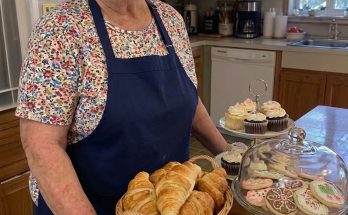
The wedding was beautiful. Even I had to admit that Constance had won most of the fights, and the result was elegant and tasteful and looked like a magazine spread. My mother wore a navy blue dress she’d altered three times to get the fit right, and she sat in the front row with her hands folded in her lap, watching me walk down the aisle.
She didn’t cry. My mother never cried in public.
But when I reached her to give her a quick kiss before taking David’s hand, she whispered, “You look like your father today.”
It was the kindest thing she could have said.
The reception was at a country club. Not Constance’s and Robert’s country club. They belonged to the more exclusive one, the one with the two-year wait list and the whispered membership fees, but a nice one. The food was excellent. The band knew how to read a room. I danced with David and then with Robert and then with my mother, who moved stiffly because she’d never been much of a dancer but refused to sit down when the mother-daughter song started.
At some point in the evening, I found myself at the bar next to one of Robert’s business partners, an older man heavy around the middle with the reddened nose of someone who’d been enjoying the open bar since cocktail hour. He introduced himself as Frank something. I didn’t catch the last name. He asked how I was enjoying my big day.
“It’s wonderful,” I said. “Constance really outdid herself.”
He raised his glass toward the room.
“Although I hear she had quite the partner in crime. David’s business must be doing well these days, huh? All this can’t have been cheap.”
I laughed politely, though I wasn’t sure what he meant. David’s business was doing well. I knew that much. He’d started his own commercial real estate firm three years before we met, and it had grown steadily. We weren’t rich, but we were comfortable.
I assumed his parents were helping with the wedding costs, but we hadn’t talked about the specifics. That was probably something we should have talked about. I made a mental note to bring it up later.
“Must be nice,” Frank continued. “Having a wife who understands hard work. Constance told me about your mother. Worked her way up from nothing, right? That’s the American dream right there.”
“Something like that.”
“Robert always says that’s what this country needs more of. People who earn it. Not like some of these kids today expecting handouts.”
He drained his glass.
“No offense to your generation.”
“None taken.”
I extracted myself from the conversation and went to find David. He was on the patio with some of his college friends, laughing at something, his tie loosened and his hair starting to come undone from the gel he’d put in it that morning. He looked happy, relaxed, like a man who didn’t have anything to worry about.
I decided the money conversation could wait until after the honeymoon.
We bought a house six months after the wedding. A three-bedroom colonial in a neighborhood that was close enough to David’s parents to make them happy, but far enough away to give us breathing room.
I liked the house.
“It has good bones,” my mother said when she visited, which was her way of saying it needed work but had potential.
When we sat down to figure out finances, David suggested he handle the mortgage and the big accounts.
“It’s easier,” he said, “since my income fluctuates with the deals.”
I’d keep my own account for daily expenses, groceries, small stuff. We’d have a joint account for shared costs, and I’d transfer a fixed amount each month. The rest he’d manage.
It made sense at the time. He was the one with the business background. He was the one who understood investments and cash flow and all the things they don’t teach you at nonprofit jobs.
I trusted him.
I didn’t ask to see statements or check balances. That was what trust meant, I thought. Later, I’d realize there’s a difference between trust and willful blindness, but by then it was too late.
David’s business was growing. I’d been promoted at the nonprofit. We talked about starting a family in a year or two, once we’d settled in.
The first real crack appeared at Thanksgiving.
We were hosting, our first time hosting anything as a married couple. I’d been cooking for days, trying to replicate the dishes my mother used to make when I was growing up. Not Polish food, not for Thanksgiving, but the American standards. Turkey, stuffing, green bean casserole, the works.
My mother was coming, and so were Constance and Robert. David’s younger sister was supposed to fly in from Seattle, but she’d come down with something at the last minute and canceled. It was going to be just the five of us.
My mother arrived early to help. She was wearing a simple brown dress and her good pearl earrings, the ones she’d bought herself for her fiftieth birthday. And she brought a pie she’d made from scratch, even though I told her she didn’t need to bring anything.
“Your kitchen is warm,” she said, kissing my cheek. “That’s good. A kitchen should be warm.”
Constance and Robert arrived exactly on time, which somehow felt like a criticism. They brought wine, an expensive bottle Robert made sure to mention, and flowers in a vase that probably cost more than my mother’s earrings.
Constance air-kissed me on both cheeks and then turned to my mother.
“Marta,” she said, “how nice to see you again.”
“Constance.” My mother nodded. She wasn’t much for air-kissing.
“What a lovely dress. Very practical.”
My mother looked down at herself.
“Thank you. It has pockets.”
Constance’s smile flickered. She wasn’t sure if my mother was being sincere or making fun of her. The truth was, my mother was being entirely sincere. She loved pockets. She thought fashion was a waste of time and money, and the fact that this dress had pockets was genuinely one of its selling points.
Dinner went smoothly enough. Robert dominated the conversation with stories about golf and the stock market and a trip he and Constance were planning to Italy in the spring. My mother listened politely, ate everything on her plate, and complimented the turkey, even though I knew I’d slightly overcooked it. David played host, refilling glasses and making sure everyone had seconds.
But then, over dessert, Constance turned to my mother and asked, “So, Marta, how is the hospital treating you these days?”
“It’s fine.”
“You must be thinking about retirement soon. You’ve been there quite a while, haven’t you?”
“Thirty-one years.”
“That’s remarkable. All those years on your feet. It must take a toll.”
“I manage.”
Constance nodded sympathetically.
“Well, you’ve certainly worked hard. No one could say you haven’t earned a rest.”
I watched my mother’s face. It didn’t change. She was good at that, at keeping her expression neutral, but I saw her hands tighten slightly around her coffee cup.
“I don’t like rest,” my mother said. “Rest is for when you’re dead.”
Robert laughed a little too loudly.
“That’s the spirit. I always say the same thing. Robert Junior, my father, worked until he was seventy-five, and he was sharp as a tack right up until the end.”
“Marta isn’t like your father, dear.” Constance patted Robert’s hand. “She’s had a very different life. Some people just aren’t cut out for leisure. They wouldn’t know what to do with themselves.”
I opened my mouth to say something. I wasn’t sure what, but something. And I felt David’s hand close over mine under the table. A warning squeeze. Don’t start.
My mother set down her coffee cup.
“You’re right,” she said evenly. “I wouldn’t know what to do. Playing golf, going to parties, spending money I didn’t earn. It would be very boring for me.”
The table went quiet.
“More pie?” I heard myself asking. “Robert, you said you wanted more pie.”
Later, after Constance and Robert had left, I found my mother in the kitchen doing dishes. I told her she didn’t need to do that. She ignored me and kept scrubbing.
“She didn’t mean it like that,” I said.
My mother turned off the faucet and dried her hands on a towel. Then she looked at me with an expression I couldn’t quite read.
“Yes, she did,” she said. “And so did you.”
That winter, David started coming home late. At first, I didn’t think much of it. His business was expanding. He’d taken on two new agents and was looking at a commercial property downtown that could double his office space. He was stressed. I could see that. But he said it was a good kind of stress. Growing pains.
But the late nights kept getting later. He’d miss dinner, then apologize, then miss it again the next night. He stopped talking about the business over breakfast, which we’d always done, running through his day, asking my advice about negotiations and client relationships. Now he just stared at his phone and grunted when I asked him questions.
One night in February, I woke up at two in the morning and found him sitting at the kitchen table in the dark.
“David.”
He jumped.
“What are you doing up?”
“I heard something.”
I pulled my robe tighter around me.
“Are you okay?”
“I’m fine.” He stood up, but he didn’t move toward me. “Just couldn’t sleep. Go back to bed.”
“You’ve been doing this a lot.”
“Doing what?”
“Not sleeping. Not talking to me. Coming home at midnight and barely saying hello.”
He ran a hand through his hair. In the dim light from the stove hood, he looked older, tired in a way that sleep wouldn’t fix.
“Work stuff,” he said finally. “I’ll figure it out.”
“What kind of work stuff?”
“It’s complicated.”
“So uncomplicate it. Talk to me.”
He was quiet for a long moment. Then he said, “The Brennan deal fell through.”
I knew about the Brennan deal. It was a major acquisition, an office building near the university that David had been working on for months. The commission alone would have been substantial.
“When did that happen?”
“Last month.”
“Last month?”
I stared at him.
“Why didn’t you tell me?”
“Because I thought I could fix it. I thought if I just—”
He stopped, shook his head.
“It doesn’t matter. It’s done.”
“There will be other deals.”
“You don’t understand.”
His voice cracked just barely.
“There aren’t other deals. There haven’t been other deals in a while. The market’s bad. The financing dried up. And I—”
He pressed the heels of his hands against his eyes.
“I think I’m in trouble.”
I went to him then, put my arms around him, felt him stiffen and then slowly relax into me.
“How bad?” I asked.
“Bad.”
His voice was muffled against my shoulder.
“I’ve been covering payroll out of our savings. I had to let Marcus go last week. The new office space—I signed a lease I can’t afford because I thought the Brennan money would be there, and now it’s not, and I don’t know how to—”
He broke off.
I held him tighter.
“We’ll figure it out,” I said. “Whatever it is, we’ll figure it out together.”
He pulled back and looked at me, and there was something in his face I didn’t recognize. Shame, maybe, or fear.
“I can’t tell my parents.”
“Why not?”
“Because they—”
He laughed, but it wasn’t a happy sound.
“You don’t know them. Not really. They have this idea of who I am, what I’m supposed to be. If they find out I failed—”
“You didn’t fail. The market crashed.”
“They won’t see it that way.”
He pulled away from me, started pacing.
“My dad gave me money when I started the business. It was supposed to be an investment, but it was really, I don’t know, a test. To see if I could handle it, to see if I could be someone they could be proud of. And every quarter, I send them a check, a dividend from their investment, because that’s what I’m supposed to do. That’s what a successful son does. And if I stop—”
“Wait.”
I held up a hand.
“You’ve been sending your parents money. Out of your business.”
“It’s not like that. It’s their investment. They’re entitled to returns.”
“Returns, David. If your business is struggling, they don’t get to just keep taking money from you.”
“They’re not taking—”
There. He stopped.
“You wouldn’t understand.”
That phrase. I’d heard it before. Constance used it all the time.
You wouldn’t understand.
As if not having grown up in their world made me incapable of basic comprehension.
“Help me understand,” I said.
But he didn’t. He just shook his head and went back to bed.
And I stood in the kitchen alone for a long time, trying to piece together what I’d just learned. I should have asked to see the accounts then. I should have demanded the full picture, but I didn’t. Part of me still trusted him. Part of me didn’t want to know.
The next few months were a lesson in controlled collapse.
David was right about the market. Commercial real estate was brutal that year, and his firm wasn’t the only one struggling. But unlike the larger agencies with deeper reserves, David didn’t have a cushion. He let go of his other agent. He sublet the new office space at a loss. He started working from home three days a week to save on overhead, which meant I’d come back from work to find him hunched over his laptop in the spare bedroom, surrounded by paperwork and cold coffee.
And every quarter, he still sent his parents a check.
I tried to talk to him about it. I tried to explain that we couldn’t keep draining our savings to maintain a fiction. He got defensive, then angry, then silent. It was the same pattern every time. I’d push, he’d shut down, and we’d spend the next few days circling each other like strangers.
I started to ask about the accounts. He’d say he’d show me later.
Later never came.
Once I pressed harder and he snapped at me, said I didn’t trust him. Said if I wanted to manage the money, I should have married an accountant.
I backed off.
I shouldn’t have.
What I didn’t know, what I wouldn’t find out until later, was that he’d already blown through our savings entirely. The checks he was sending to his parents weren’t coming from our account. They were coming from a line of credit he’d opened in both our names without telling me. The statements went to his office. I never saw them.
But that revelation was still months away.
In the meantime, Constance and Robert kept living their lives. I saw them at Easter, at Robert’s birthday dinner in May, at a Fourth of July barbecue at their house, where Constance complained that the caterer had used the wrong napkins. They never mentioned the business. Robert occasionally made vague comments about the market being tough for everyone, but he said it the way people talk about the weather, acknowledging it existed without expecting it to affect him personally.
As far as they were concerned, everything was fine. Why wouldn’t it be?
Their quarterly checks kept arriving.
One Saturday afternoon in August, my mother called and asked if I could come over. Just me. She had something she wanted to discuss.
I drove out to her house. The plastic deer were still in the neighbors’ yards. The driveway had a new crack that she’d probably already called someone about. She met me at the door with a cup of tea and led me to her kitchen table.
“Your husband,” she said. “He called me.”
I set down my cup.
“He what?”
“Three weeks ago. He asked me for money.”
I couldn’t speak. I just stared at her.
“He said it was temporary. A bridge loan, he called it. Just until things improved.”
She folded her hands on the table.
“He was very polite about it. Very apologetic. He said he wouldn’t ask except he had no other options.”
“Mom.”
My voice came out as a whisper.
“Tell me you didn’t.”
“I did.”
The kitchen felt very small suddenly. Very close.
“How much?”
“Thirty thousand dollars.”
I think I made a sound. Some kind of laugh or groan or something in between.
Thirty thousand dollars.
Almost a third of what she’d spent her entire life saving.
“Why didn’t you tell me?” I asked. “Three weeks. Mom, you waited three weeks.”
She looked at me steadily.
“He asked me not to. He said he would tell you himself when he had a plan. He said if I told you first, it would make things worse between you.”
She paused.
“I gave him two weeks. Then I gave him one more. He didn’t tell you.”
“So you’re telling me now?”
“I’m telling you now because he called again last week. He needs more.”
That night, I confronted David about the loans. He admitted to all of it. The thirty thousand from my mother, the credit lines in my name, the quarterly checks to his parents that were really coming from money my mother had saved her whole life.
He swore he’d pay it all back. He swore things would get better.
For a while, he even kept some of his promises.
He got a job at a brokerage firm. Not what he’d wanted, not the entrepreneurial dream he’d built his identity around, but a paycheck. He started coming home at reasonable hours. We paid off the credit line over the course of the next year, slowly and painfully, cutting back on everything we could cut back on. I took on extra projects at work. We stopped eating out. We canceled the vacation we’d been planning.
And through all of it, Constance and Robert kept their illusions.
David had told them he was transitioning to a new opportunity. That was how he phrased it, transitioning, and they’d accepted it without question. The quarterly checks kept coming, smaller now, but still coming. And I knew where the money was coming from because I’d seen the statements. Half of David’s new salary was going to maintain his parents’ belief that their son was a success.
The thing about Constance and Robert was that they never asked. They never called to see how David was doing. They never offered help. They just cashed the checks and continued their lives. The country club, the charity galas, the anniversary party they were planning for their fortieth.
The fortieth anniversary party became the thing we planned around, like a wedding or a funeral. Constance had been building up to it for two years. She’d mentioned it at every gathering, every dinner, every phone call. It was going to be at their country club, the one with the two-year wait list. They were inviting one hundred fifty people. There would be a live band and a plated dinner and speeches.
The save-the-dates went out in January.
Formal invitations in March.
I watched David open ours. Cream-colored card stock, embossed lettering, their names in flowing script.
My mother’s invitation never came.
I waited a week, then two. Finally, I asked David to call his mother about it.
“Maybe it got lost in the mail,” I said.
David’s face told me it hadn’t gotten lost in the mail.
“I’ll handle it,” he said.
He didn’t handle it.
Two more weeks passed. The party was a month away.
“David.”
“I know. I know. I’ll call her.”
“You said that two weeks ago.”
“She’s been busy with the planning.”
“Call her now while I’m standing here.”
He called. I listened to his side of the conversation. A lot of uh-huh and I see and no, I understand, and watched his face go through several expressions I couldn’t quite name. When he hung up, he wouldn’t look at me.
“Well?” I said.
“She said there’s a capacity issue. Fire codes. They had to cut the guest list.”
“My mother has been to every holiday at that house for four years.”
“I know.”
“She came to our wedding.”
“I know.”
“And she’s being cut because of fire codes.”
David finally met my eyes.
“She said it would be better this way. That your mother wouldn’t be comfortable at this kind of event.”
“This kind of event?”
“A formal dinner, wine pairings, speeches, she said.”
He stopped.
“What did she say?”
“She said your mother wouldn’t understand.”
The words hung in the air between us. The same words Constance had been saying, one way or another, since the day I met her.
Your mother wouldn’t understand.
As if understanding required money or breeding or a country club membership rather than basic human intelligence.
“I want to hear it from her,” I said.
“What?”
“I want to hear her say it to my mother’s face.”
David stared at me.
“You can’t be serious.”
“The anniversary dinner is next Saturday. We’re going to stop by their house before to drop off a gift, and my mother is coming with us.”
“That’s a terrible idea.”
“Maybe. But I’m done letting your mother insult mine behind closed doors. If she wants to exclude her, she can look her in the eye and explain why.”
David argued. He said it would cause a scene. He said his mother would never forgive him. He said I was being vindictive and unreasonable and this wasn’t the right time.
I didn’t argue back.
I just told him we were going and he could come with us or not.
His choice.
He came.
We pulled into Constance and Robert’s driveway at four o’clock on Saturday afternoon. The party started at six. We had plenty of time to drop off the gift and leave before the guests arrived.
My mother sat in the back seat wearing her good dress, the brown one with pockets and her pearl earrings. She hadn’t asked why we were stopping by the house. She hadn’t asked anything. When I’d called to invite her, she’d just said, “What time should I be ready?”
Constance opened the door before we reached it. She was already in her party dress, a deep burgundy gown that probably cost more than my mother’s monthly mortgage had been, and her hair was swept up in an elaborate arrangement that must have taken hours.
“David, what a lovely surprise.”
Her eyes moved past him to me, then to my mother standing behind me.
Her smile froze.
“And Marta. I wasn’t expecting—”
“We brought a gift,” I said. “For the anniversary.”
“How thoughtful.”
Constance didn’t move from the doorway.
“You really didn’t have to.”
“Can we come in?”
A pause. Just a fraction too long.
“Of course. Of course. Robert is in the study. I’ll just—the caterers are everywhere. It’s absolute chaos.”
She stepped aside.
We walked into the foyer, the same foyer where I’d stood on my first visit all those years ago, trying to figure out what kind of people these were. The house smelled like flowers and expensive perfume. Through the archway to the living room, I could see staff members arranging centerpieces.
“The place looks beautiful,” David said.
“Thank you, darling. We’ve worked so hard on this.”
Constance’s eyes kept drifting to my mother, who stood quietly by the door, taking in the preparations with an expression I couldn’t read.
“Marta, can I get you something to drink? Water? Tea?”
“I’m fine.”
“Are you sure? It’s no trouble.”
“I said, I’m fine.”
Another pause.
Constance’s smile was starting to look painful.
“Well,” she said, “this is a nice surprise. I just wish you’d called ahead.”
“I would have—” She caught herself.
“Would have what?” I asked.
“Nothing.”
“Nothing at all?”
She laughed. A bright, artificial sound.
“I’m just so scattered today. Big events, you know, so much to think about.”
“My mother was wondering about her invitation,” I said. “It seems to have gotten lost in the mail.”
The smile dropped from Constance’s face just for a second, then it was back, but different now. Sharper.
“I see.”
She looked at David.
“David, didn’t you explain?”
“I explained.”
“Then I’m not sure what—”
“I’d like to hear it from you,” my mother said.
Everyone turned to look at her.
She stood very straight, her hands clasped in front of her, her face calm.
“I’d like to hear,” she continued, “why I’m not welcome at your party.”
Constance’s expression flickered through several emotions. Surprise, irritation, and something that might have been contempt before she covered it up.
“It’s not that you’re not welcome, Marta. It’s just, well, it’s a capacity issue. As I explained to David, we’ve had to make very difficult choices about the guest list, even some of our oldest friends.”
“That’s not what you told David.”
Constance’s eyes narrowed.
“I’m sorry?”
“You told him I wouldn’t be comfortable. That I wouldn’t understand.”
My mother’s voice was perfectly level.
“I’d like you to explain what that means.”
“I didn’t mean anything by it. I simply meant that—”
Constance gestured vaguely at the preparations around her.
“This is a certain kind of event. The wine pairings, the formal service, the dress code. It’s a lot to navigate if you’re not used to it.”
“I’ve attended formal dinners before.”
“I’m sure you have. Church functions and the like. But this is—”
She stopped herself, took a breath.
“Look, this is our fortieth anniversary. We’ve planned this for two years. Every detail matters, and I just think—”
She looked at my mother’s dress, at her sensible shoes, at her pearl earrings that had probably cost a fraction of the vase in the corner.
“I think everyone would be more comfortable if we kept this to people who understand the occasion.”
“The occasion?” my mother repeated.
“Yes. The occasion.”
It was as if something in Constance had finally slipped.
“It’s a sophisticated event.”
Her voice had taken on an edge now, the careful politeness falling away.
“I don’t expect you to understand the nuances. It’s not your fault. It’s just—you come from a different world, a different background, and that’s fine. That’s perfectly fine. But this is our celebration, and we have the right to share it with people who—”
She stopped, looked at me, then at David, then back at my mother.
“People who belong,” she finished.
The words fell into a silence so complete I could hear the caterers in the next room clinking glasses and discussing placement.
My mother stood there very still, her face unreadable.
“I see,” she said finally. “Thank you for explaining.”
She turned and walked out the front door.
I didn’t say anything to Constance. I didn’t need to. Her face was already rearranging itself, the defensive set of her jaw, the slight lift of her chin that said she’d done nothing wrong and wasn’t about to apologize for speaking the truth.
“Honestly,” she said to David. “I was only being honest.”
David opened his mouth, closed it again, looked at me, looked at the door my mother had walked through.
“We should go,” he said.
We walked out. Behind us, I heard Constance call something after David. Something about seeing him at six, about being on time for the speeches. But I wasn’t listening anymore.
My mother was already in the car, sitting in the back seat with her hands folded in her lap. Her face was still calm, perfectly composed. But when I got in beside her, I saw that her hands were trembling.
“Mom—”
“Don’t,” she said quietly. “Not here.”
David got in the driver’s seat, started the car, pulled out of the driveway. The house, with its stone pillars and its circular turnaround and its caterers and its wine pairings, disappeared behind us.
We drove in silence for five minutes. Ten.
Finally, David said, “I’m sorry. I didn’t know she would—”
“Yes, you did,” I said.
He didn’t respond.
Another mile passed. My mother stared out the window, watching the expensive houses give way to slightly less expensive houses, then to the highway.
“David,” I said, “pull over.”
“What?”
“Pull over. I need to say something, and I don’t want you driving when I say it.”
He pulled into a gas station parking lot, turned off the engine. The silence was sudden and complete.
“The money stops,” I said. “Today. All of it.”
David turned to look at me.
“What are you talking about?”
“The dividends, the quarterly checks, whatever you’re still sending your parents. It stops tonight.”
“I can’t just—”
“My mother gave you thirty thousand dollars. She gave it to you so you could keep pretending to be something you’re not, and you took it, and then you used it to fund your parents’ lifestyle while they treated her like she wasn’t good enough to attend their party.”
My voice was shaking. I couldn’t stop it.
“That ends tonight.”
“You don’t understand what you’re asking.”
“I understand perfectly.”
“If I stop sending them money, they’ll know something’s wrong. They’ll start asking questions. My father will—”
“I don’t care what your father will do.”
“Please.”
David’s voice cracked.
“Please, just give me a few more months. Let me figure out how to—”
“No.”
“You’re being unreasonable.”
“I’m being unreasonable?”
I laughed.
“Your mother just told mine that she doesn’t belong at a party. A party funded with her own savings. And I’m being unreasonable?”
“That’s not—the money thing is separate.”
“You can’t just—”
“I can, and I am.”
“If you do this, you’ll destroy everything. My relationship with my parents, our finances, everything we’ve built.”
“What have we built, David? Tell me. Because from where I’m sitting, we’ve built a house of cards held together with my mother’s retirement fund.”
He stared at me.
In the back seat, my mother was silent, watching.
“This is about revenge,” David said. “You’re angry at my mother, so you’re punishing me.”
“I’m not punishing anyone. I’m stopping something that should have stopped a long time ago.”
“You don’t understand what it’s like to have parents who expect you to be—who need you to be—”
“Your parents don’t need you to be anything. They need your money. They need your success. They don’t care about you at all.”
“That’s not true.”
“Then where are they? Where were they when your business collapsed? Where were they when you were drowning in debt? They weren’t helping. They were cashing checks and planning parties and telling themselves that their son was a success because that’s all they care about.”
“Stop it.”
“They care about what you can give them. That’s it. That’s all. And I’m done letting my mother pay for their delusions.”
The parking lot was empty except for us. A truck pulled up to the gas pumps and someone got out and life continued around us as if nothing had happened.
He looked at me for a long moment.
Then he turned forward, started the car, and pulled back onto the highway.
We drove the rest of the way in silence.
The months that followed were exactly what I’d expected.
David tried to negotiate. He tried to find other sources of funding, friends, colleagues, anyone who might give him a loan to keep up the payments to his parents. No one would. He tried to explain to his parents that the dividends would be delayed, just temporarily, but Constance called him three times a week, asking when the money would arrive.
By October, the checks had stopped entirely.
By November, Constance and Robert were calling David in a panic. Their credit card had been declined at the country club. The trip to Italy they’d been planning had to be canceled. They were three months behind on their country club membership fees.
David relayed all of this to me in short, tense conversations. He blamed me. He said I’d ruined his relationship with his parents. He said I didn’t understand what I’d done.
I moved out in December.
My mother helped me pack. We loaded boxes into her car and drove them to a small apartment across town. And she didn’t say anything about David or his parents or any of it. She just carried boxes and made sure I ate dinner.
The divorce papers were filed in January.
I signed the final papers on a Tuesday in March, almost two years after that afternoon at the gas station. The process had dragged on. David contested things, then stopped contesting them, then contested them again, but eventually it was done.
We sold the house at a loss and split the remaining debt. I kept my apartment. He moved somewhere I didn’t know and didn’t ask about.
His parents, from what I gathered through mutual acquaintances, had to downsize. The house with the stone pillars and the circular driveway was sold. They moved to a condo somewhere, and their country club membership lapsed.
I didn’t go looking for details.
I didn’t need to.
A year after the divorce was finalized, I was at my mother’s house helping her plant tomatoes. It was a Saturday in May, warm enough to work outside without a jacket, cool enough that the work didn’t feel punishing. My mother had been talking about expanding her garden for months, and I’d finally found the time to help.
We worked side by side in the dirt, digging holes and placing seedlings and patting the soil down around them. The plastic deer were still in the neighbors’ yards. The driveway had been repaved since the last time I noticed, smooth new asphalt where the crack used to be.
“You’re getting better at this,” my mother said.
“I had a good teacher.”
She made a sound that might have been a laugh.
We kept working. When the last seedling was in the ground, we sat on the back steps drinking lemonade. The sun was starting to go golden the way it does in late spring, when the days are getting longer. A neighbor’s dog barked once somewhere far away and went silent.
My mother turned her glass in her hands.
“Are you happy?” she asked.
I thought about it. Really thought.
“I think so. Getting there, anyway.”
She nodded. Didn’t ask anything else.
We sat there for a while longer, watching the shadows lengthen across the garden.
“I’ve been thinking,” she said finally, “about putting in peppers next year over by the fence. That’s a good spot. Gets afternoon sun.”
“That’s what I thought.”
She stood up, brushed dirt from her knees.
“Come on. I made soup.”
I followed her inside. The kitchen smelled like onions and bay leaves and something else, something warm and familiar that I’d never been able to name, but always associated with this house, with her. She ladled soup into two bowls, slid mine across the table.
We ate without talking, the way we often did, not because we had nothing to say, but because we didn’t need to say it.
When we finished, she gathered the bowls and took them to the sink.
“Same time next weekend?” she asked.
“I’ll be here.”
“Good.”
She turned on the water.
“Bring gloves this time. Your hands look terrible.”
I looked at my hands. Dirt under my fingernails, a scrape on one knuckle from the garden stake.
I laughed.
Outside, the last of the daylight was fading, turning the garden soft and golden. The tomato seedlings we’d planted stood in their neat rows, small and fragile and full of possibility.
I picked up my keys from the counter.
“Same time next week,” I said.
My mother waved without turning around, both hands still in the sink.
I walked to my car. The air smelled like cut grass and soil and the first hints of summer. Somewhere down the street, kids were playing, their voices rising and falling in the twilight.
I got in the car, started the engine. In the rearview mirror, I could see my mother’s house, small and solid, and paid for every brick and shingle. The lights were on in the kitchen. She was probably still at the sink, doing dishes the same way she’d done them for forty years.
I pulled out of the driveway and headed home.