November arrived, and with it, the first real test of whether any of this would hold once the initial shock wore off.
Carol’s mortgage was still three months behind. She called Daniel, not me, to say the bank had sent a formal notice, and could he — not us, him specifically, carefully worded — help her “understand her options.”
He drove out, sat with her at the kitchen table, and instead of writing a check, he helped her call the mortgage servicer and set up a hardship forbearance plan, three months of reduced payments added to the back end of the loan.
It took ninety minutes on hold and a fair amount of Carol crying with frustration at being asked for documentation she didn’t have organized.
“I didn’t know they’d even do that,” she told him, genuinely surprised, like the idea that a bank might work with her instead of simply being owed money by her son’s wife forever had never occurred to her as an option.
She also, that same week, picked up part-time work at a fabric store two towns over, something she hadn’t done since before Daniel’s father died. She was sixty-one. She complained about her knees. She kept the job anyway.
Renee’s situation was messier.
Without the monthly cushion, she fell behind on her younger daughter’s gymnastics tuition and had to pull her out mid-season, a decision that came with its own small, ugly scene — her daughter crying in the car, Renee posting something vaguely martyred about “sacrifices nobody sees” that I heard about secondhand and didn’t respond to.
But she also, a few weeks later, picked up a second part-time bookkeeping job on weekends, something Daniel told me about almost sheepishly, like he wasn’t sure if I’d take it as good news or as one more thing Renee should have been doing years ago.
I took it as good news. I didn’t call to say so. It wasn’t my job anymore to manage anyone’s feelings about their own choices.
Tyler’s car got repossessed in the second week of November.
I found out from Daniel, who found out from Carol, who apparently found out from Tyler in a panicked call where he asked, again, if there was any way I might “just this once” cover the missed payments to get it back.
I said no. It was the hardest no of the whole fall, harder than the ones I’d said to Carol, because Tyler had never actually done anything cruel to me directly. He was just young, and used to a floor that had quietly vanished out from under him.
He ended up taking the bus for six weeks while he saved for a used car, cash, nothing financed, a 2011 sedan with a hundred and forty thousand miles on it that Daniel helped him inspect before he bought it.
“He asked me if I was disappointed in him,” Daniel told me. “For the repo.”
“What did you say?”
“I said I was more disappointed that it took losing a car for him to learn what an emergency fund is. But that I wasn’t disappointed in him as a person. There’s a difference.”
I thought that was a good answer. Better than the version of Daniel from two months earlier would have given.
We had our own small test that same month, ironically — Lily’s school announced a $600 fee for an out-of-state field trip, due within three weeks, and for one uncomfortable evening I sat at the kitchen table doing the same kind of math I’d have once absorbed instantly into “figuring it out for everyone,” except this time it was just our own household budget, and the number was tight but doable, and I felt an odd, clean relief in the tightness, because it was ours. We’d built our own cushion smaller than it should have been for years, quietly bleeding into everyone else’s emergencies, and now, for the first time in a long while, I watched it actually grow instead.
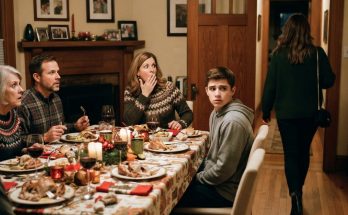
At Thanksgiving, Carol hosted again, smaller this time, no string lights, no big performance. She’d bought two more folding chairs with money from the fabric store job, she mentioned once, almost too casually, like she wanted someone to notice without having to ask them to.
Daniel and I went. I debated it for a long time beforehand.
There were exactly enough chairs.
Noah had one. Lily had one. Nobody sat on the ground.
Nobody made a comment about it either way — no apology, no acknowledgment, just a fact of the room that was different from the last time, quietly corrected without a speech attached to it.
Carol didn’t ask me for anything that day. Not money, not forgiveness, not a performance of warmth I didn’t have yet. She passed the potatoes, she asked Noah about kindergarten, and when Lily knocked over her water glass, Carol just handed her a napkin and said, “happens to everyone, sweetheart,” instead of the sharp look I half-braced for out of old habit.
It wasn’t warmth exactly. It was something smaller and more useful: the absence of the old current running underneath everything.
I noticed Renee watching me across the table at one point, like she was trying to read whether I’d softened, whether the account, so to speak, was open again.
It wasn’t. Not yet.
But I noticed, too, that she’d brought her own dessert instead of asking whose turn it was to cover it, and that felt like something.
Small. Real. Not nothing.
I want to be clear that it wasn’t all quiet growth and grudging progress. There were setbacks too, the kind that made me wonder some nights if I’d made a mistake sending that box at all.
In early December, Carol called Daniel in a genuine panic — her car’s transmission had gone out, an actual emergency this time, not a manufactured one, a two-thousand-dollar repair she needed within the week just to get to the fabric store job that was, ironically, the thing keeping her afloat in the first place.
Daniel called me before he called her back, which I noticed, and appreciated more than I said out loud.
“I’m not asking you to pay for it,” he said. “I want to talk through what we do here as a family, together, before I say anything to her. I think there’s a difference between refusing to be her emergency fund forever and refusing to help with an actual emergency once.”
I thought about it for a long time before I answered.
“I don’t think the difference is really about the car,” I finally said. “I think it’s about who calls the shop, who negotiates the price, who sits in the waiting room. If we pay for it outright, we’re right back where we started. If we help her find a payment plan, or a lower-cost mechanic, or a short-term loan she pays back herself, that’s different. That’s supporting her instead of absorbing it for her.”
We ended up co-signing a small loan through Daniel’s credit union, not writing a check, with Carol responsible for every payment herself, on a schedule, with actual paperwork, the first documented, structured financial agreement any of us had ever had with her in twenty years.
She made every payment on time. It took her four months. I checked with Daniel more than once, quietly, half expecting a missed payment to prove some old fear right. It never came.
Tyler had a harder stretch than the car alone. In late November, after the bus commute and the repossession, he called Daniel late one night, not asking for money this time, just talking, and admitted he’d started skipping meals some weeks to make sure rent cleared first.
That one hurt to hear about. I sat with real doubt for a few days after Daniel told me, wondering if the line I’d drawn was too hard, too blunt, catching people in the crossfire who hadn’t been the ones smiling over the candles.
I called Tyler myself, the first time I’d called him directly since October.
“I’m not calling to change anything about the money,” I told him, before he could hope for that. “I called because I heard you’ve been skipping meals, and that’s not a lesson I ever wanted anyone to learn. That’s just hunger.”
“I’m okay,” he said, too quickly.
“You don’t have to perform okay for me. I want you to call the county assistance office tomorrow. There’s a program for exactly this, for people between jobs or between paychecks, no shame in it, I’ll text you the number. That’s different from me writing a check. That’s a real system built for exactly your situation.”
He was quiet for a second. “I didn’t know something like that existed.”
“Most people don’t, until they need it. That’s kind of the point of what I’ve been trying to say this whole time, Tyler. There were always going to be real systems for real problems. I just made it so nobody in this family ever had to find them.”
He used the program for six weeks, until his second paycheck from a new part-time shift caught him up. He mentioned it once, months later, almost embarrassed, and I told him there was nothing to be embarrassed about. Using a safety net built for exactly that purpose was not the same thing as leaning on a person who was never supposed to be one.