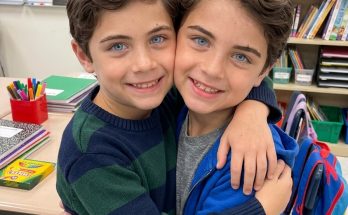
The evidentiary hearing was scheduled for late spring.
By then, the twins had learned to play together for brief stretches without needing an adult to referee every disagreement.
They still argued.
Cole accused Stefan of changing rules midway through games.
Stefan accused Cole of quitting when he lost.
Dr. Shaw said that sounded like progress.
They were beginning to see each other as people instead of mysteries.
I was beginning to see how difficult that could be for adults.
Nina and I could talk about lunch schedules and sports practices.
We could not yet talk calmly about the first six weeks after the boys were born.
Every detail carried a sting.
At a meeting with our lawyers, Nina admitted she had never asked me directly whether I had signed the guardianship papers.
Her lawyer did not try to make that sound wise.
Instead, he explained that Nina had relied on a formal court order and assurances from Mark and an attorney.
That reliance would matter to the judge.
So would her failure to pursue the doubts she had privately expressed.
The facts were not simple enough for either of us to claim a clean conscience about every choice.
Mark's lawyer requested a separate meeting to discuss the possibility of a negotiated resolution to the guardianship petition.
Dana explained that negotiation did not require me to forgive Mark or ignore the disputed documents.
It meant considering what contact and authority arrangement would best serve Stefan while the case proceeded.
We prepared proposals.
I asked for regular, gradually increasing visits and participation in medical and educational decisions where legally appropriate.
Nina asked to remain Stefan's primary residential caregiver for the time being.
She also wanted assurance that the court would not force a sudden name change or move.
I did not oppose those protections.
What I opposed was an arrangement that treated me as a visitor permitted to know my son only when someone else felt generous.
Dana helped me say that without attacking Nina's parenting.
At the hearing, I testified about the birth.
I described waking in the hospital.
I described the single bassinet.
I described Mark saying our other baby had died.
The attorney asked whether I had knowingly signed a guardianship consent.
“No.”
“Did you knowingly authorize anyone to sign for you?”
“No.”
“Did you receive notice of the original court hearing?”
“No.”
I answered each question as carefully as I could.
Then Mark's attorney asked whether my medical condition had affected my memory.
I acknowledged that parts of the hospital stay were unclear.
I had been seriously ill.
That was documented.
But I did not claim to remember every hour.
I testified only to what I knew.
The attorney asked whether Mark had sometimes handled paperwork for our family.
“Yes.”
“Had you trusted him to do that?”
“Yes.”
I looked toward the judge.
“That's part of why I didn't question his story.”
The judge made a note.
Nina testified next.
She spoke about Stefan's respiratory appointments as a baby.
The nights he had trouble sleeping.
His first words.
The time he broke his wrist falling off a bicycle.
She also admitted she had never met me before that day at school.
“Why not?” Dana asked.
Nina's eyes filled.
“Mark repeatedly said contact would harm Mara and confuse Stefan. I accepted that longer than I should have.”
I did not look away.
Her answer hurt.
It was still an answer.
The handwriting expert testified about the original document after examining it through proper procedures.
The expert identified material differences between the disputed signature and verified examples, while explaining the limits of handwriting analysis.
Other evidence mattered too.
Records placed me in the hospital during parts of the alleged notice process.
The address on the affidavit was not mine.
There were inconsistencies in the claimed service dates.
The attorney who prepared the original petition was questioned about what identification had been provided and how the purported consent had been verified.
Some answers were incomplete.
The judge did not announce a final finding that day.
Further evidence and written submissions would be considered.
The proceedings felt slower than the anger burning in me.
I left exhausted.
Outside, Mark approached with his lawyer several steps behind.
“I heard what you said about trusting me,” he began.
I held up my hand.
“Please don't turn my testimony into a conversation about our marriage.”
He stopped.
I could see that he wanted to tell me he loved me.
I did not need those words in the courthouse hallway.
I needed the truth in the records.
The hearing had forced me to confront something I preferred not to admit.
There had been clues during the years when I believed Oliver was dead.
Not clear proof.
Not anything I could have reasonably assembled into the truth at the time.
But moments that now looked different.
Once, when Cole was three, Mark's phone rang during dinner.
He glanced at the screen and walked into the garage.
I heard him say, “I'll come tomorrow. Tell him I haven't forgotten.”
When he came back, he said a coworker needed a favor.
I had believed him.
Another time, he returned from a weekend errand with a child's sticker on his shirt.
I teased him about visiting a toy store.
He said he had helped a friend's son choose a present.
I had believed that too.
It would have been easy to turn those memories into proof that I had been foolish.
Dr. Shaw discouraged that kind of thinking when we spoke during one of my own sessions.
“You had a reason to trust your spouse,” she said.
“He controlled information you had no independent reason to think was false.”
I knew she was right.
Still, my mind kept trying to solve the past as though it were a puzzle I should have finished sooner.
I began keeping two columns in a journal.
The first said What I Knew Then.
The second said What I Know Now.
Under the first, I wrote: Mark told me Oliver died.
Under the second, I wrote: Hospital records show he lived.
Under the first, I wrote: Mark said the cremation was private.
Under the second, I wrote: There is no death certificate in the records we have obtained.
The exercise did not undo the anger.
It helped me stop blaming myself for a story deliberately kept from me.
At the same time, I wondered how much Stefan understood about Mark's behavior.
Nina told me he had started asking whether adults could lie because they were scared.
She had answered that fear might explain why someone chose to lie, but it did not make the lie harmless.
I appreciated her answer.
The boys needed explanations that did not turn Mark into a monster or excuse him.
During a museum visit, Cole asked whether everyone in a family had to forgive each other.
Stefan was examining a display case and did not seem to hear.
I said, “No. People can be kind and safe without agreeing to everything someone asks.”
Cole frowned.
“What if someone says sorry?”
“Then you can listen if you want. You can also need more time.”
He considered that.
“Can I still go fishing with Dad?”
“If it's part of the agreed plan and you feel comfortable, we'll work on it.”
He smiled a little.
“I miss fishing.”
The next week, Mark arranged a supervised outing to a pond with a safe walkway.
Cole came home with a small drawing of a fish because they hadn't caught anything.
He said he had enjoyed it.
Then he asked if he could skip the next visit.
I said we would discuss his feelings and the arrangements rather than force an immediate answer.
He looked relieved.
I was learning that parenting after betrayal often meant accepting contradictory feelings without demanding a final verdict.
The school later sent home a form asking families about emergency contacts for an upcoming trip.
Cole brought it to me without comment.
Stefan brought his to Nina, who copied the relevant information to me for our planning.
I looked at the two forms on the kitchen counter.
For years, paperwork had been used to hide a child from me.
Now we were using paperwork to make sure both children could go on a school trip safely.
It was an unremarkable improvement.
I signed Cole's form and put it in his folder.
Nina signed Stefan's under her existing authority.
Neither of us tried to turn the signatures into an argument about who mattered more.
That evening, the boys talked about sandwiches and which teacher might supervise their group.
They were far more interested in lunch than in any of the adult legal distinctions.
I hoped they would be allowed that kind of ordinary concern for a long time.
That weekend, the boys visited a science museum together.
Nina and I followed at a distance as they tested magnets and built paper bridges.
Cole kept a notebook of their experiments.
Stefan drew pictures beside the results.
At lunch, Stefan asked whether Mark would come to the next outing.
I felt Nina stiffen.
“We're still figuring out adult schedules,” I said.
Stefan nodded.
“Does he still get to be my dad?”
“He is your father,” Nina said.
“But adults have to work out how visits happen safely.”
Stefan picked up a french fry.
“I don't want everybody angry forever.”
I reached across the table, then stopped before touching his hand.
“You aren't responsible for that.”
He looked at me.
“I know. Ms. Shaw said.”
“She's right.”
He returned to his lunch.
Cole asked whether they could see the robot exhibit again.
We said yes.
On the drive home, Nina told me she had begun her own counseling.
She said she needed to understand why fear had kept her from asking questions.
I was glad she was getting help.
I did not tell her that made everything fine.
At my front door, I found a small envelope from Mark.
Inside was a photograph of the twins taken in the neonatal unit.
He had written on the back, “I should have given you this eight years ago.”
I put it in the folder with the other records.
Then I went to make dinner.
There were still two boys who needed to eat, even when the adults had spent another day arguing about the past.
Click here to continue reading: PART 9: When the Judge Questioned the Old Guardianship, None of Us Could Pretend the Past Was Simple
The Boy in the Principal’s Office Had My Son’s Eyes and My Lost Baby’s Birthmark
Part 8 of 12