Detective Whitcomb asked me to bring someone to our next meeting.
I took my sister, Margaret.
She sat beside me with a notebook and a bottle of water.
She didn't interrupt the detective.
She just stayed close enough that I could reach for her hand.
The investigators had assembled a more complete timeline.
The financial dispute began months before the fishing trip.
Daniel discovered irregular withdrawals from the family partnership.
He confronted Dean.
The recording on the old phone captured part of that confrontation the day before the trip.
Then Dean made arrangements involving the second boat.
Records, testimony, and equipment documents placed the vessel near the lake that weekend.
Dean had initially told investigators six years earlier that he was at home throughout the relevant hours.
New evidence conflicted with that statement.
Through his attorney, Dean later acknowledged going to the storage yard that weekend.
He said he'd been dealing with equipment and had not met Daniel on the water.
The detectives were still testing that explanation.
The original accident report had not included the boat because no one knew it might be relevant.
"Can you arrest him?" I asked.
"Not simply because his account changed," the detective said.
She described how investigators needed evidence supporting particular offenses and prosecutors would decide what charges the available proof justified.
I felt disappointed.
I also understood that an arrest wasn't the same as an answer.
Margaret asked whether we needed additional security at home.
The detective recommended documenting any unwanted contact and calling if we felt threatened.
She said she would update us if there was a specific safety concern.
That afternoon, I drove to the cemetery where my parents were buried.
Daniel and the boys had no graves.
We'd placed a small memorial stone beside my parents' plot.
It carried four names.
Sometimes I stood there feeling foolish for speaking to people whose bodies had never been found.
That day, I spoke anyway.
"I'm trying," I said.
"I'm trying to do this without losing the girls too."
The wind moved through the trees.
I stayed until my hands were cold.
When I returned home, Sophie had made soup.
It was a simple recipe Daniel used to make after fishing trips.
We ate at the kitchen table.
Emma asked whether the police might eventually find enough to say what happened.
"Maybe," I said.
"But we may still have questions."
Lily wanted to know whether Uncle Dean would come for holidays again.
I used to believe that knowing the truth would make every old memory settle into place.
Instead, I found myself questioning events I'd never thought about before.
Dean had been the person who called the insurance agent when I couldn't stop crying.
He had stood beside me while I signed papers at the attorney's office.
He had offered to handle the partnership because he said I had enough worries.
I remembered the way he'd frowned when I asked for copies.
"Don't bury yourself in paperwork," he'd said.
At the time, it sounded protective.
Now I wished I'd insisted on understanding more.
I took the unsigned transfer document to an attorney who worked with estates and business matters.
She explained that an unsigned proposal didn't transfer ownership merely because someone wanted it to.
She also explained that Daniel's legal status and the partnership agreement could complicate who had authority to act for his interest.
We would need to review actual documents, not just Dean's description of them.
I didn't sign anything.
That felt like a small victory after years of depending on his guidance.
The attorney made a list of records she needed.
Some were in our possession.
Others would have to be requested from institutions or obtained through legal processes.
I asked whether we could recover everything Dean might have taken.
She didn't promise that.
Money might have been spent years earlier.
Recovery could depend on judgments, assets, and practical collection issues.
"We'll first establish what belongs to whom," she said.
"Then we'll decide what claims make sense."
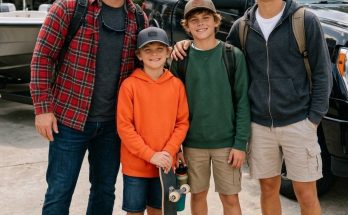
I went home and put her list on the refrigerator beside the photograph.
For a while, it bothered me to see legal tasks next to four smiling faces.
Then I moved the list to a folder.
The kitchen didn't need to become a courtroom.
I was beginning to understand that even justified investigation could take over a family's life if we let it.
Margaret invited us to dinner one Sunday.
Her husband grilled vegetables while the girls played a board game on the porch.
I sat with Margaret in the kitchen.
She asked whether I wanted to talk about Dean.
I said yes.
Then I surprised myself by talking instead about Daniel.
I told her how he could never remember which child preferred which sandwich unless he wrote it down.
I told her he made a different silly nickname for every fishing lure.
I told her he once drove two hours back to a campground because Noah had left a stuffed animal in the cabin.
Margaret laughed.
"He really did love those kids."
I nodded.
"I keep thinking he must have been so worried about them."
She reached across the table.
"You don't have to imagine every terrible second."
I looked away.
She was right.
The lack of a complete record left space for my mind to invent things.
I was beginning to recognize those inventions as fears, not facts.
I could refuse to describe them to the girls as though they had happened.
I could also refuse the opposite temptation of making up an easy, painless ending.
We didn't know the final moments.
That uncertainty belonged in our story.
When we returned home, there was a message from the detective.
She wanted to arrange another meeting.
I stood in the hallway reading the words.
Sophie came beside me.
"News?"
"Maybe."
She asked whether I was ready.
"No," I said.
"But I'll go."
"No," I answered.
"Not while things are unresolved."
She looked sad.
I didn't tell her she was wrong to miss him.
Dean had been kind to her for much of her childhood.
Children could love someone and still need distance from them.
The investigation moved slowly through the winter.
A specialist studied the damage patterns on the two boats.
The findings supported the possibility that a second vessel had struck Daniel's boat.
But they did not prove who was steering or exactly when the contact occurred.
A prosecutor authorized further examination of the financial records and considered charges related to the disputed transfers.
We were advised not to discuss that publicly.
Then a former employee of the storage yard came forward.
He had heard renewed news about the case and contacted investigators.
He said Dean had asked him to clear a private launch area shortly before the disappearance.
He had also helped move fuel containers to the second boat.
At the time, Dean told him a customer needed an urgent repair run.
The employee hadn't questioned it.
He remembered the unusual request because it was late and weather was worsening.
During the winter, I began attending a small support group at the library after hours.
The people there had experienced different kinds of loss.
Some had lost spouses to illness.
One woman had a brother who had been missing for decades.
Another had received answers after a long investigation but still struggled with grief.
Nobody pretended our experiences were identical.
We listened without comparing whose pain was worse.
At first, I hardly spoke.
Then I told them about the trouble I had with family photographs.
I could look at the last driveway picture for hours.
But I sometimes avoided photographs from happier years because they reminded me of possibilities that would never happen.
The woman with the missing brother understood.
She said a photograph could be a comfort one day and a wound the next.
"You can put it away when you need to," she told me.
That permission helped.
I began making a second album for the girls.
It included birthday parties, camping trips, school plays, and the messy kitchen after holiday baking.
I let them choose the photographs.
Lily picked one where Owen had fallen asleep holding a puppy.
Emma chose a picture of Caleb making a funny face during a family dinner.
Sophie chose an image of Daniel teaching her to change a bicycle tire.
I added the last driveway photograph near the end.
It wasn't the only picture anymore.
When I closed the album, I understood that remembering their lives didn't require reconstructing every moment of their disappearance.
We could keep working for the truth while protecting the memories that already belonged to us.
When I put the photo album away, I left the living-room lamp on. For the first time in days, I didn't review the case before sleeping. I listened instead to Emma's cello through the wall. She repeated the same difficult measure until she got it right. Her persistence sounded like ordinary life returning.
His account aligned with portions of the old ledger.
I asked whether the witness had seen Daniel.
"No," the detective answered.
"He did not."
So we were still missing the most important moment.
The place where two brothers might have met.
The choice that had left four people gone.
One evening, Dean sent a long email.
He apologized for becoming angry.
He said he understood why we needed distance.
But he also insisted that he had done nothing to harm Daniel or the boys.
He ended with a request to speak to the girls.
I forwarded the message to my lawyer.
Then I wrote a short reply with her advice.
I told Dean not to contact my daughters and to direct any necessary communication through counsel.
He didn't answer.
A week later, the detective called.
Dean's attorney had offered to arrange another interview.
The investigators hoped it might clarify his movements on the lake.
I asked if I could listen.
"No," she said.
"But if we learn something we can responsibly share, I will call you."
For three days, my phone stayed silent.
On the fourth morning, Detective Whitcomb asked to come to the house.
She said Dean had finally acknowledged being aboard the second boat that weekend.
Click here to continue reading: PART 10: What Dean finally admitted about the storm and the collision that took my family
The photograph from the driveway and the recording Sophie found six years after the lake
Part 9 of 12