The first memorial by the lake took place on a quiet Saturday.
It was almost a year after Sophie found the phone.
The air was cool, and the water lay still beneath a pale sky.
We had chosen a small public overlook rather than the boat ramp.
I couldn't bear to stand where the truck had been found.
Not yet.
Margaret brought flowers.
Emma brought her cello.
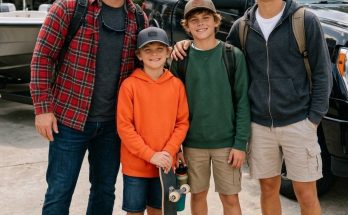
Sophie carried a framed copy of the photograph I'd taken in our driveway.
Lily held Noah's wooden fish.
A few close friends joined us.
There were no reporters.
There were no speeches about fate or destiny.
I told everyone that we were there to remember four people, not to retell a criminal case.
Daniel had been a husband who made pancakes too large for the plates.
Owen had been a boy who pretended to dislike hugs but always stood close enough to receive one.
Caleb had collected flat stones in his pockets.
Noah had laughed with his whole body.
They deserved more than the manner in which they disappeared.
Emma played a piece she had practiced for weeks.
Her hands trembled at first.
Then the notes steadied.
Sophie read a short letter to her father and brothers.
She said she had been angry at the years they hadn't been able to share.
She said she knew they hadn't chosen to leave her.
She promised she would keep telling stories about them.
Lily didn't want to speak.
I stood beside her while she placed the wooden fish near the flowers.
When the service ended, we collected everything we had brought so nothing was left behind on the shoreline.
We walked back to our cars together.
I looked once over my shoulder.
The lake was beautiful.
I hated that it could still be beautiful.
I also knew Daniel would have noticed the light on the water.
He would have asked me to take a picture.
The practical work continued after the memorial.
An accountant helped untangle the storage-yard partnership records.
My attorney explained how Daniel's missing-person and estate status affected the remaining business interest.
The process had not been simple, and we did not pretend it was.
Some records were incomplete.
Some money could not be recovered.
Restitution was ordered, but collecting payments would take time and depended on Dean's circumstances.
I stopped waiting for those funds as though they might repair what had happened.
We made a budget that worked with the income we actually had.
I kept my job at the library.
I adjusted the household expenses.
Sophie helped me compare insurance and bank paperwork without taking on responsibility for paying the family bills.
I wanted her to study and build her own life.
She had already carried enough.
The three girls began counseling at different paces.
Emma liked having a place where she could be angry without protecting me.
Lily sometimes chose drawing instead of talking.
Sophie worked through the strange guilt she felt for finding the phone.
I reminded her that the wrongdoing belonged to the person who concealed the truth.
Finding evidence had not caused the harm.
The memorial required more planning than I expected.
I wanted it to be private, but I also knew other people had loved Daniel and the boys.
Their teachers had remembered them.
Their friends had grown older without them.
A few neighbors still spoke of the search every summer.
I made a short guest list and asked everyone not to invite reporters or post the location publicly.
Our pastor offered to speak.
I thanked him and explained that I wanted the girls to choose what happened.
He understood.
Sophie said she'd like to read a letter.
Emma asked whether she could play music.
Lily said she didn't want a microphone.
I told her there wouldn't be one.
We selected a place with benches and a view of the water.
There was enough room for everyone without walking close to the steep bank.
I checked accessibility for older relatives.
I arranged for a friend to bring water and tissues.
Those details might sound small.
After years of chaos, being able to make a plan and carry it out mattered to me.
The night before the service, I opened a box of photographs.
Daniel was in most of them with his hair sticking up and a child climbing over him.
There were pictures of Owen learning to swim.
Pictures of Caleb proudly holding a tiny fish that Daniel had immediately helped him release.
Pictures of Noah wearing a life jacket nearly as big as he was.
I chose a few and arranged them in an album.
I didn't choose only pictures from the lake.
They had lived whole lives outside of fishing trips.
At the memorial, Margaret helped people find seats.
The girls stayed close together.
When it was my turn to speak, I looked at them before looking at the water.
I said Daniel had been impatient with broken appliances but patient with children.
I said Owen always saved a seat for someone sitting alone.
I said Caleb asked questions until adults had to admit when they didn't know.
I said Noah believed every animal deserved a name.
People smiled through tears.
That was how I wanted them remembered.
After the service, Sophie asked whether we could take a family picture.
For an instant, I hesitated.
Pictures had hurt for so long.
Then I stood between my daughters.
Margaret held the camera.
Emma put one arm around Lily.
Sophie leaned toward me.
We smiled, not because everything was fixed, but because we were together.
Later, I printed the picture and placed it beside the old driveway photograph.
One image showed the family we had lost.
The other showed the family still here.
Neither canceled the other.
The following months brought ordinary changes.
Lily grew tall enough to borrow my sweaters.
Emma learned a difficult piece she'd once thought beyond her ability.
Sophie called from campus to tell me she'd passed a tough exam.
I learned to repair small things around the house and hire someone when the job was beyond me.
I stopped measuring independence by whether I could do everything alone.
Sometimes I asked Margaret for help.
Sometimes I helped her.
We became family in a more practical, reciprocal way.
I still had difficult mornings.
Anniversaries made me restless.
Storms could bring back the sound of the search helicopters.
On those days, I used the tools I'd learned in counseling.
I called someone I trusted.
I ate a meal.
I took a walk.
I reminded myself that remembering wasn't the same as being trapped.
On the anniversary of the trip, the girls and I cooked Daniel's favorite dinner.
We told one story about each of the boys.
Then we watched a silly movie.
No one told us we needed to move on.
We were moving forward in our own way.
I also learned to stop asking her to revisit the recording.
The police had copies.
The original was documented.
She didn't need to watch it again to prove anything.
Dean wrote to me once through his attorney.
He said he was sorry.
He acknowledged that his silence had injured our family.
He did not ask for forgiveness.
I read the letter twice.
Then I placed it in a folder with the court documents.
I didn't reply.
I could recognize a statement of remorse without reopening our lives to him.
The girls made their own choices about whether to read it.
Lily declined.
Emma read it and said nothing.
Sophie asked me to keep it until she was older.
I respected all three decisions.
Over time, our house began to change.
We donated some clothing.
We kept the things that held memories we loved.
Daniel's winter coat went into a garment bag.
The phone no longer sat in our home, but I kept a copy of the evidence inventory among our papers.
We repainted the upstairs hallway.
Emma moved her music stand into the room where the boys had once kept their fishing gear.
Lily put a small shelf beside her bed for the wooden fish after the memorial.
I still keep the first photograph where I can see it.
Sometimes I pass it without stopping.
Sometimes I take it down and trace the faces with my eyes.
I never know which kind of day it will be.
But I no longer believe a good day means I have forgotten anyone.
The girls taught me that.
They kept growing despite the years we had lost.
And I wanted them to know that building happy lives was not a betrayal of their father or brothers.
Sophie left for college on a bright morning.
I carried a box of books to her car.
She hugged me beside the driveway.
"Are you going to be okay?"
"I will have hard days," I said.
"But I have good days too."
She smiled.
"Call me anyway."
"I will."
After she drove away, I stood in almost the same place where I'd once photographed Daniel and the boys.
For years, I'd avoided looking at that section of the driveway.
Now I saw the cracks in the concrete, the lilac bush beside the gate, and the little patch of grass Daniel always forgot to trim.
I went inside and took the photograph from the refrigerator.
The four faces smiled back at me.
I didn't feel the familiar urge to ask the picture a question it could not answer.
I knew more than I had known six years earlier.
Dean had taken a second boat onto the lake.
There had been a collision.
He had concealed his involvement and failed to call for help.
Some details of those final moments remained unknowable.
I would not fill them with invented certainty.
I missed my husband.
I missed my sons.
I always would.
But my daughters were here.
They were growing, loving, learning, and becoming people Daniel would have delighted in knowing.
I put the photograph in a new frame.
Then I set it on the shelf beside pictures of all three girls.
Our family was not the family I had expected to have.
It was still our family.
And I intended to be present for every life we had left to live.
THE END
The End
Read more original stories on Feel Every Story.
The photograph from the driveway and the recording Sophie found six years after the lake
Part 12 of 12